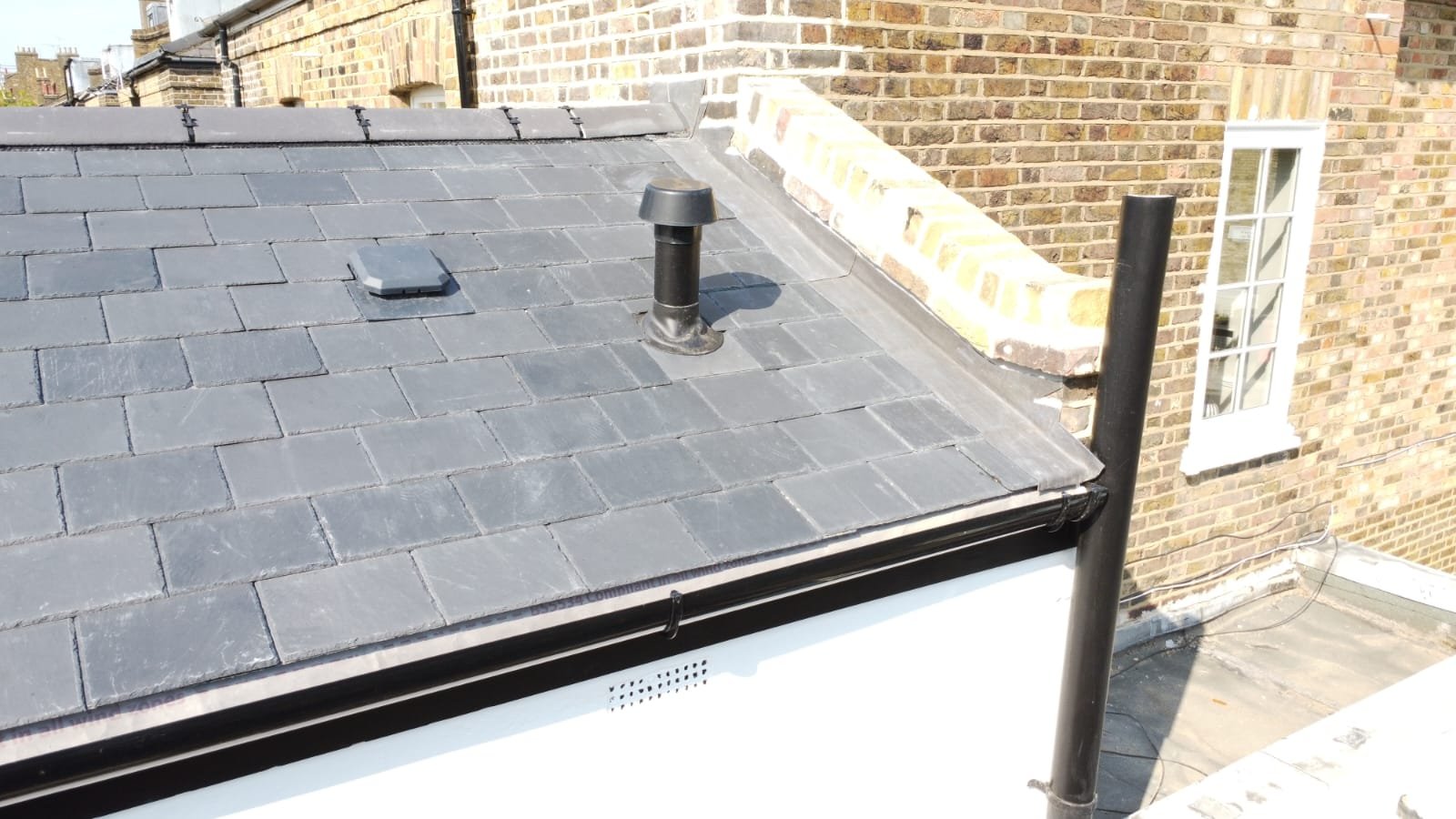
The bay window is one of the best features of a Victorian or Edwardian London house. However, the bay window roof is also one of the most common places for a leak to start. So if you’ve noticed damp at the top of the bay, staining on the window reveal or water on the sill after rain, check the roof over the bay first. This guide explains why bay roofs fail, how lead compares with GRP and felt, and when to repair or replace.
Why a bay window roof leaks
Lead fatigue and splitting
Because lead expands and contracts every day with the temperature, it needs room to move. If a sheet is too big, or nailed down too tightly, it can’t move freely. As a result, it buckles and eventually cracks. That is why lead guidance warns specifically against oversized pieces and over-fixing.
The wrong underlay
Generally, lead should sit on a suitable underlay over a sound timber deck. However, old bitumen felts can stick to the lead and pull it apart as it moves. Condensation under the lead can also cause corrosion from underneath, which shows as white powder or streaks.
Failed flashing where the bay meets the wall
A lead flashing tucked into a mortar joint protects the junction between the top of the bay window roof and the front wall. When the pointing falls out or the flashing lifts, water runs straight down behind the bay. In fact, this is often the real cause of “bay window” leaks. Our guide to brick repointing explains why those joints matter.
Failed felt or patch repairs
Over the years, owners have re-covered many bays in felt or patched them with bitumen and tape. These rarely last long on a bay window roof, because of the curved shapes and the movement around the window head.
Lead vs GRP vs felt for a bay window roof
| Lead | GRP fibreglass | Felt | |
|---|---|---|---|
| Lifespan | Very long when detailed correctly | Good | Shortest |
| Look | Traditional, right for period houses | Smooth, can be coloured grey | Plain, often looks out of place |
| Conservation areas | Usually the expected material | May not be accepted on a front elevation | Rarely appropriate |
Always check with your council if you live in a conservation area or a listed building.
So on a London period front, lead is almost always the right choice. That is because it lasts far longer than the alternatives, looks right, and is what conservation officers expect to see.
Repair or replace? What we check on a survey
- Is the lead itself sound, or cracked and split in several places?
- How big are the pieces, and are the joints (rolls and drips) correctly sized?
- Is the timber deck under the lead dry and solid?
- Is the flashing where the bay meets the front wall properly dressed and pointed?
- Are there signs of water running into the window head or brickwork below?
A leadworker can sometimes repair a single split in otherwise good lead. But if the lead is fatigued all over, the deck is rotten or the pieces are too big, the long-term fix is new lead in correctly sized pieces.
Access for bay window roof work
Roofers can often reach ground-floor bays with ladders or a small tower. However, first-floor and two-storey bays usually need a scaffold or tower on the pavement, which may need a council licence. If other roof work is due, it makes sense to plan it together. Our guide to roof replacement in London explains how.
Two recent North London bay window roof projects
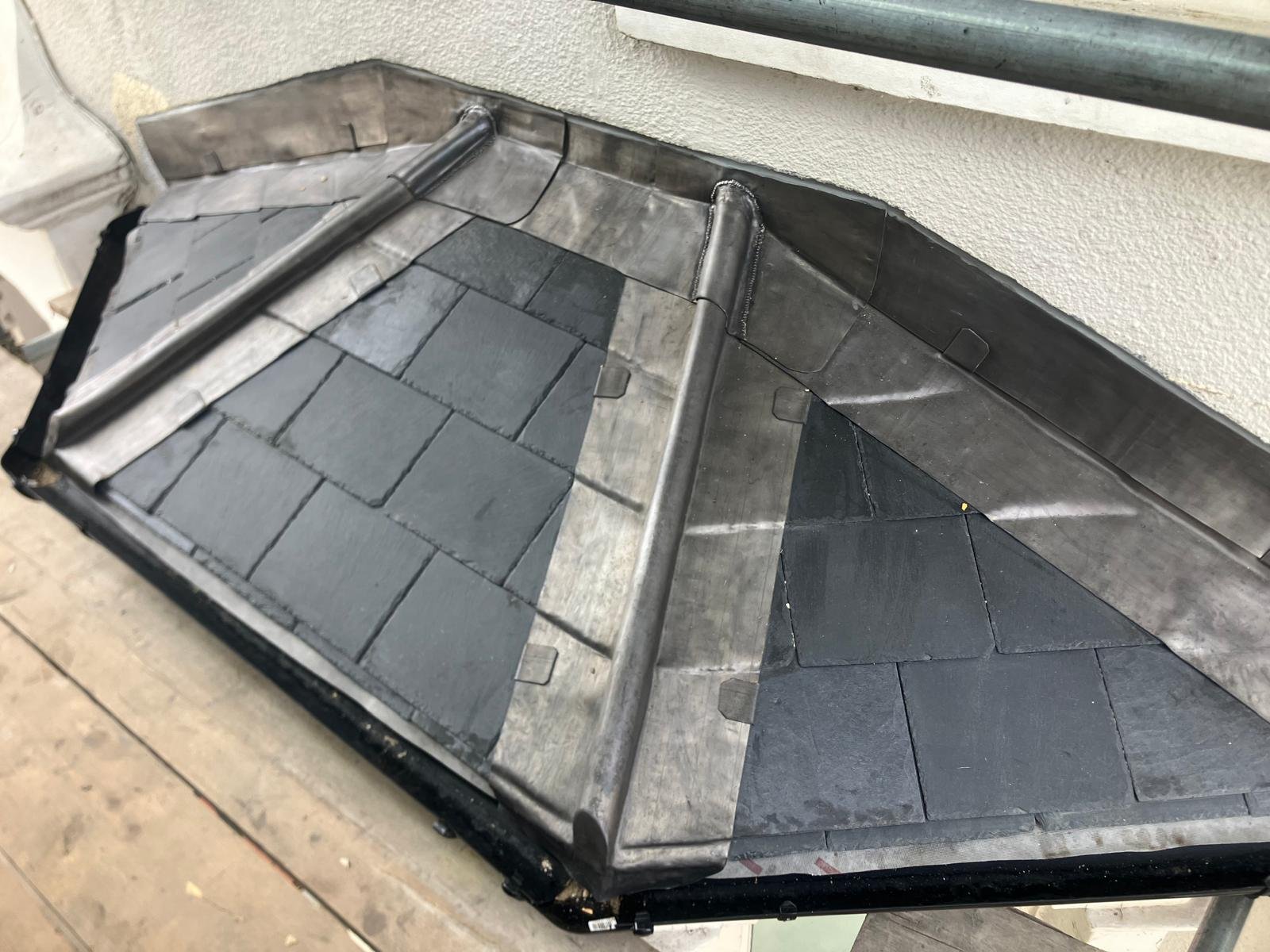
On a front bay window in North London, we stripped out the failing covering and installed a new lead bay roof. Similarly, on a ground-floor bay in Hackney, we fitted a new lead roof with a classic finish.
★★★★★
“Incredible lead work and attention to details. Found a solution to every leak”
Nimrod K. · Google review, 2022
We also install and repair lead bay roofs across Islington, Hackney, Highbury, Kentish Town, Camden and the rest of North, East and Central London. See all our leadwork services.
Where we work in London
Frequently asked questions
Correctly installed rolled lead is one of the longest-lasting roof coverings, often lasting for generations. However, poor detailing, such as oversized pieces or over-fixing, can cause it to fail much sooner.
Often, yes, for ground-floor bays, which a roofer can usually reach safely with ladders or a small tower. First-floor and taller bays normally need a tower or scaffold for safe access, and a council licence if it stands on the pavement.
On a period front, lead is usually the better choice because it lasts far longer, suits the house and is generally what conservation officers expect. GRP can work on less visible bays, but always check first if you are in a conservation area.
The usual causes are split or fatigued lead on the bay roof, failed flashing where the bay meets the front wall, or old felt and patch repairs that have broken down. Water can also come through failed pointing above the bay. Therefore, a survey will pin down the source.