Crumbling mortar, gaps you can push a key into and damp patches inside a front wall are all signs that a house needs brick repointing. On a London period house, however, the most important decision is the mortar. Get it right and the wall can last for generations. But if you use the wrong mortar, it can damage the very bricks it should protect. Here’s what brick repointing involves, why lime mortar matters, and how to tell good work from bad.
What is brick repointing and when does a wall need it?
Brick repointing means raking out the worn outer part of the mortar joints and refilling them with fresh mortar, finished to suit the wall. It doesn’t need doing just because a wall looks old. In fact, full repointing is rarely necessary, and small local repairs are often enough. Signs your wall needs it:
- Mortar that is soft, sandy or falling out, with recessed joints you can feel.
- Damp patches on the inside of an external wall, especially after driving rain.
- Plants or moss growing out of joints.
- Old cement repairs that have cracked away from the brick.
- Bricks starting to crumble around hard cement joints.
Lime mortar vs cement for brick repointing
Builders put up most Victorian and Georgian houses in Islington, Hackney, Camden and Marylebone in soft London stock brick, laid in lime mortar. These walls get wet and then dry out through the joints, because the lime lets them breathe.
Conservation guidance from Historic England is clear on three points:
- The mortar should be slightly weaker and more breathable than the brick, so the joint, not the brick, takes the wear.
- Dense cement mortar stops moisture leaving through the joints. Water then escapes through the bricks instead, which speeds up their decay.
- For homes from before the early 20th century, the right mortar for brick repointing will almost certainly be lime-based.
That is why so many London fronts show crumbling, “spalled” brick faces next to sharp, hard cement joints that someone added decades ago. Cement repointing can look neat at first. But on a period house it often stores up damage, as our guide to spalling bricks explains.
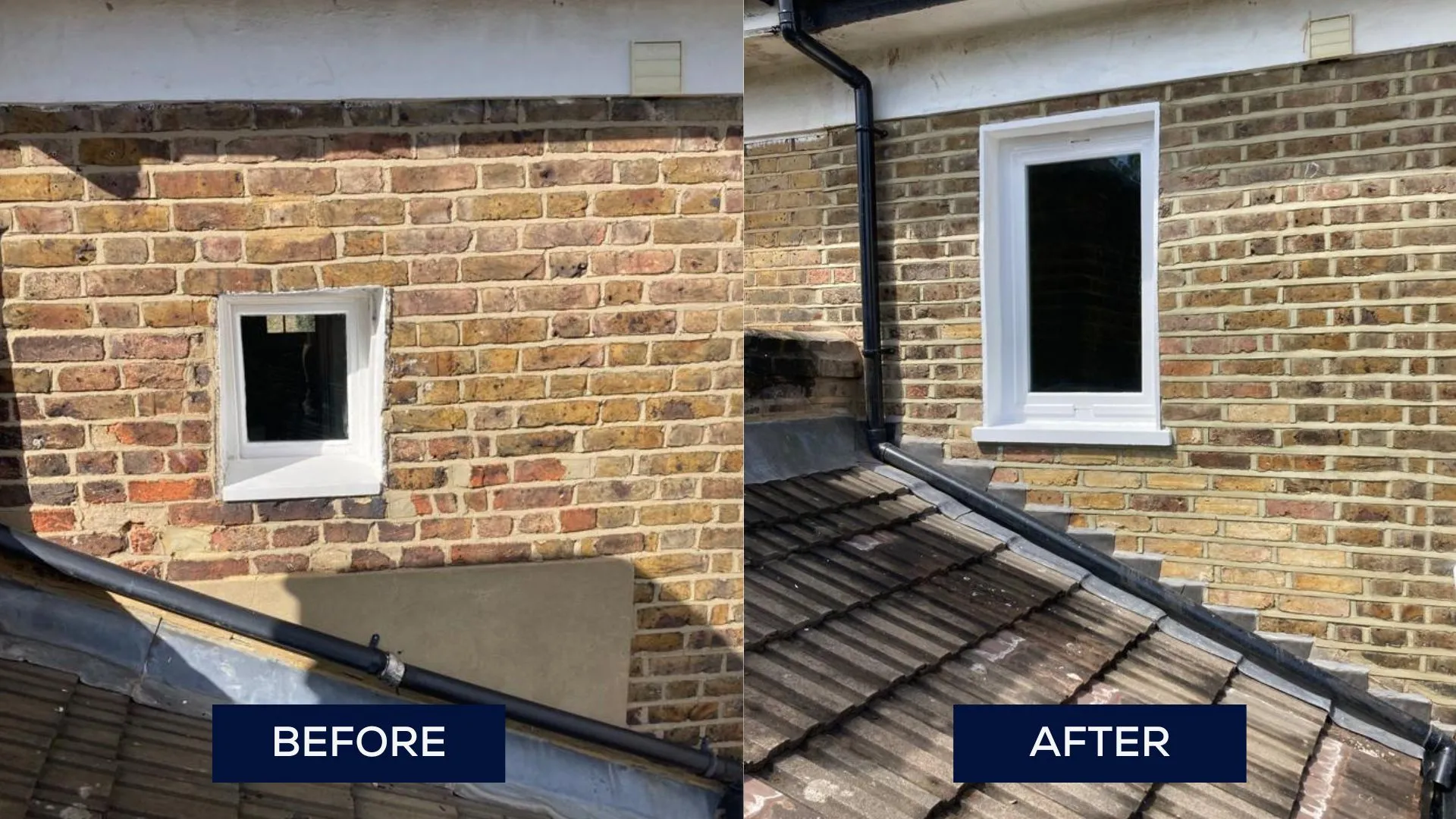
Before & after: what good brick repointing looks like
Good brick repointing is almost invisible from across the street. Look for:
- Joints raked out by hand to an even depth, without widening joints or chipping brick edges.
- Mortar colour and texture that match the original, often based on a sample of the old mortar.
- A joint finish that suits the house, for example flush, slightly recessed or traditional tuck pointing on some London fronts.
- Clean brick faces with no mortar smeared across them.
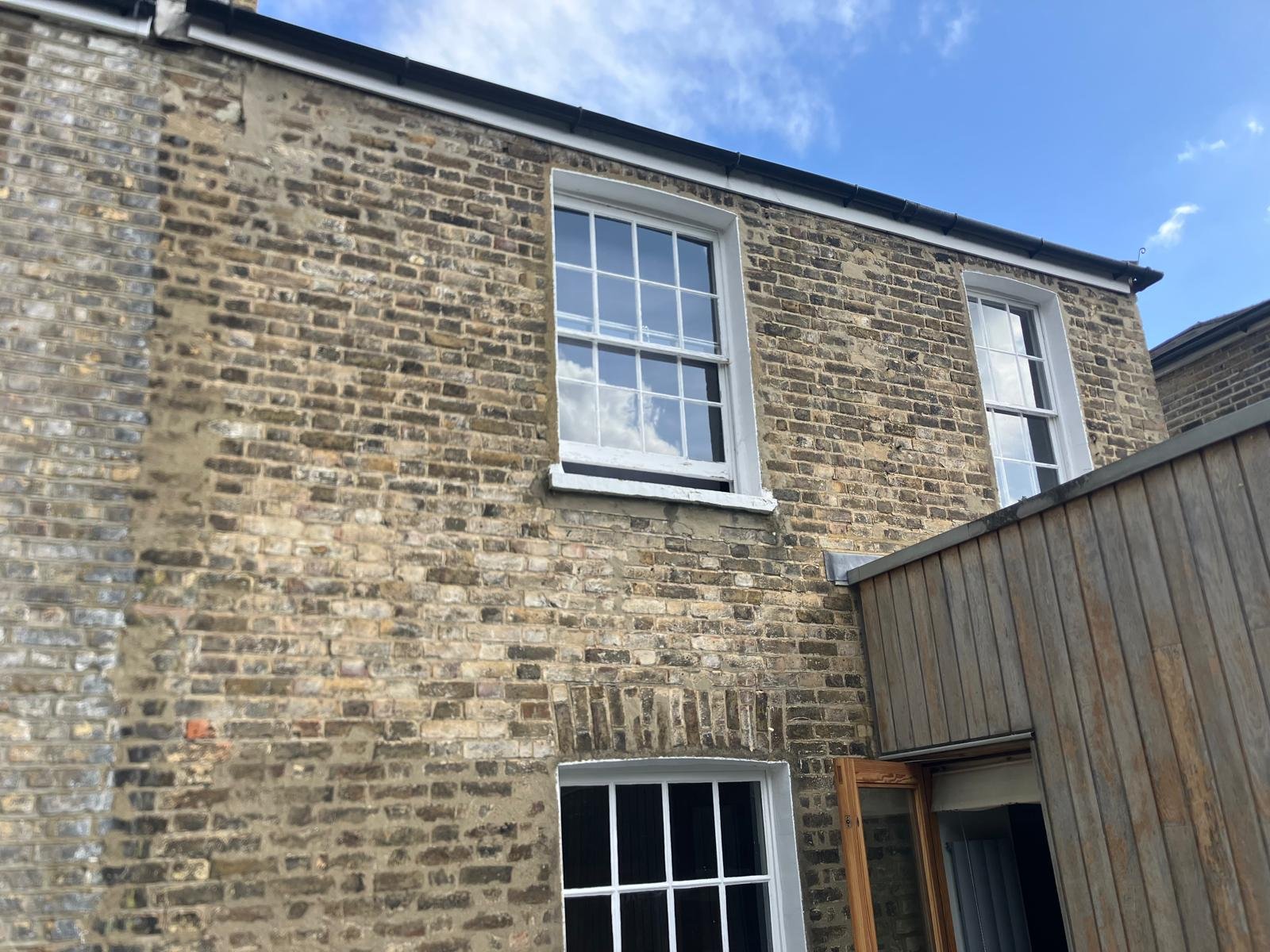
You can see the full process in our heritage lime repointing project. If the brick is dirty too, our guide to safe brick cleaning explains how to combine the two.
★★★★★
“After extensive re-pointing work to the front of my property in London N1, I am more that satisfied with the end result. My property has a new lease of life whilst retaining original character.”
Joanne C. · Google review, 2024
How long brick repointing takes
A single front elevation of a terrace is typically a job of days, not weeks, once the scaffold is up. However, a whole house, or a wall with hard cement joints to remove, takes longer. Lime mortar also needs protecting from rain, strong sun and frost while it cures. So good contractors plan around the weather rather than rushing.
★★★★★
“Repairing a 100-year-old building is a challenge, but one that this company knows how to take on and do well.”
Edith C. · Google review, 2023
Brick repointing in conservation areas and listed buildings
Much of Islington, Hackney, Camden and Marylebone sits in a conservation area. Like-for-like repointing doesn’t normally need planning permission. For listed buildings, repointing by hand to match the original generally doesn’t need listed building consent either. But using the wrong materials, or raking out joints with power tools, is likely to need it. So if you’re unsure, ask your council’s conservation officer. We’re happy to talk it through with them.
We carry out brick repointing on period homes in Islington, Hackney, Marylebone and across North, East and Central London. See our brickwork services.
Need brick repointing in London?
Where we work in London
Frequently asked questions
Look for soft or crumbling mortar, joints you can scrape out with a key, damp patches on the inside of external walls and plants growing from joints. Chimneys and parapets usually show it first because they face the worst weather.
Yes, for most houses from before the early 20th century. Conservation guidance advises that mortar should be slightly weaker and more breathable than the brick, which for period homes almost always means lime. Hard cement can trap moisture and damage soft London stock bricks.
Well-executed repointing in the right mortar can last for many decades. How long depends on exposure, drainage and the quality of the work. Joints on chimneys and parapets face the worst weather and usually need attention first.
Yes, with care. Lime mortar needs protection from frost, heavy rain and drying winds while it cures. So a good contractor plans around the forecast and covers the work. Repointing shouldn’t go ahead when the forecast shows frost.