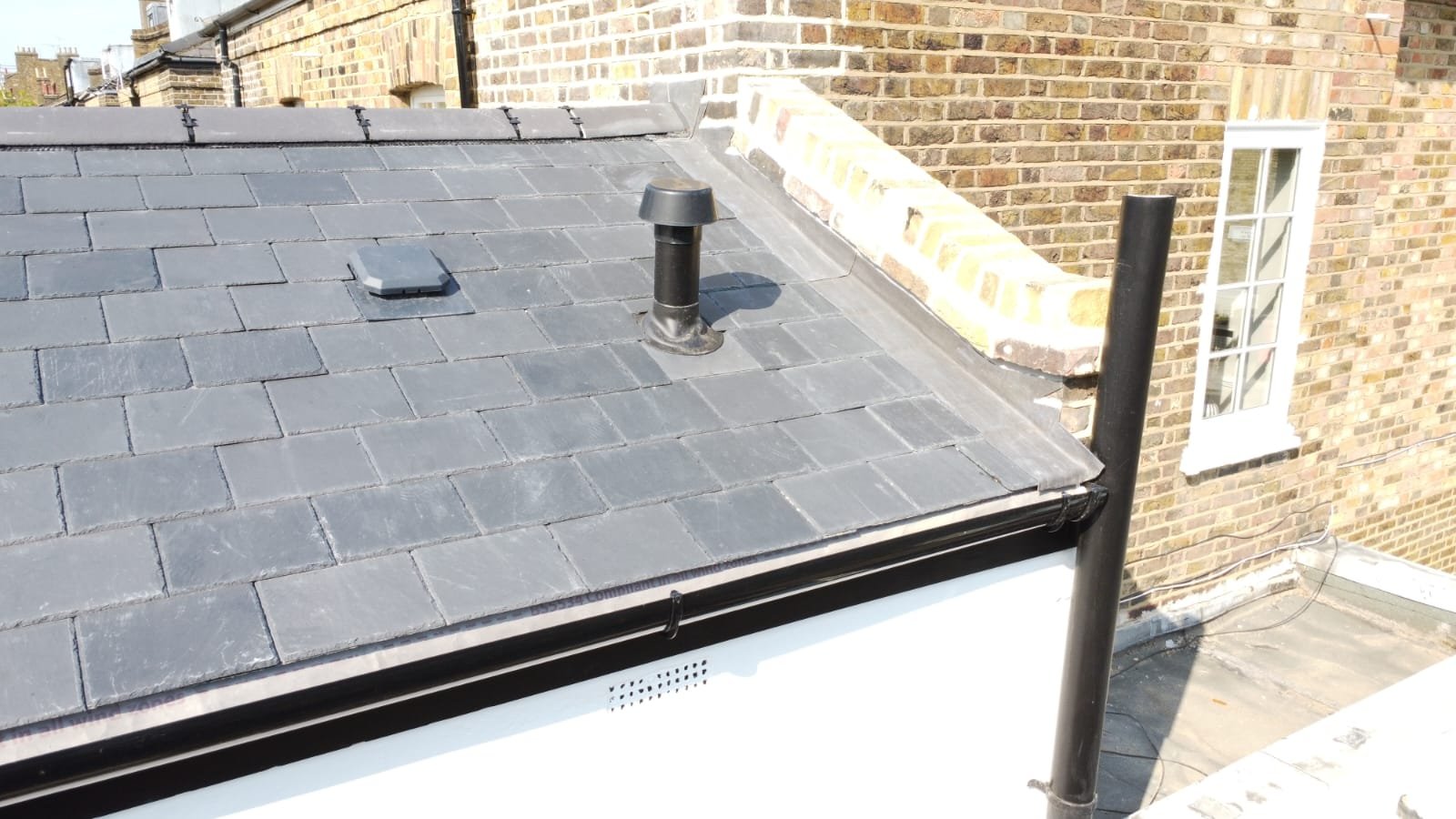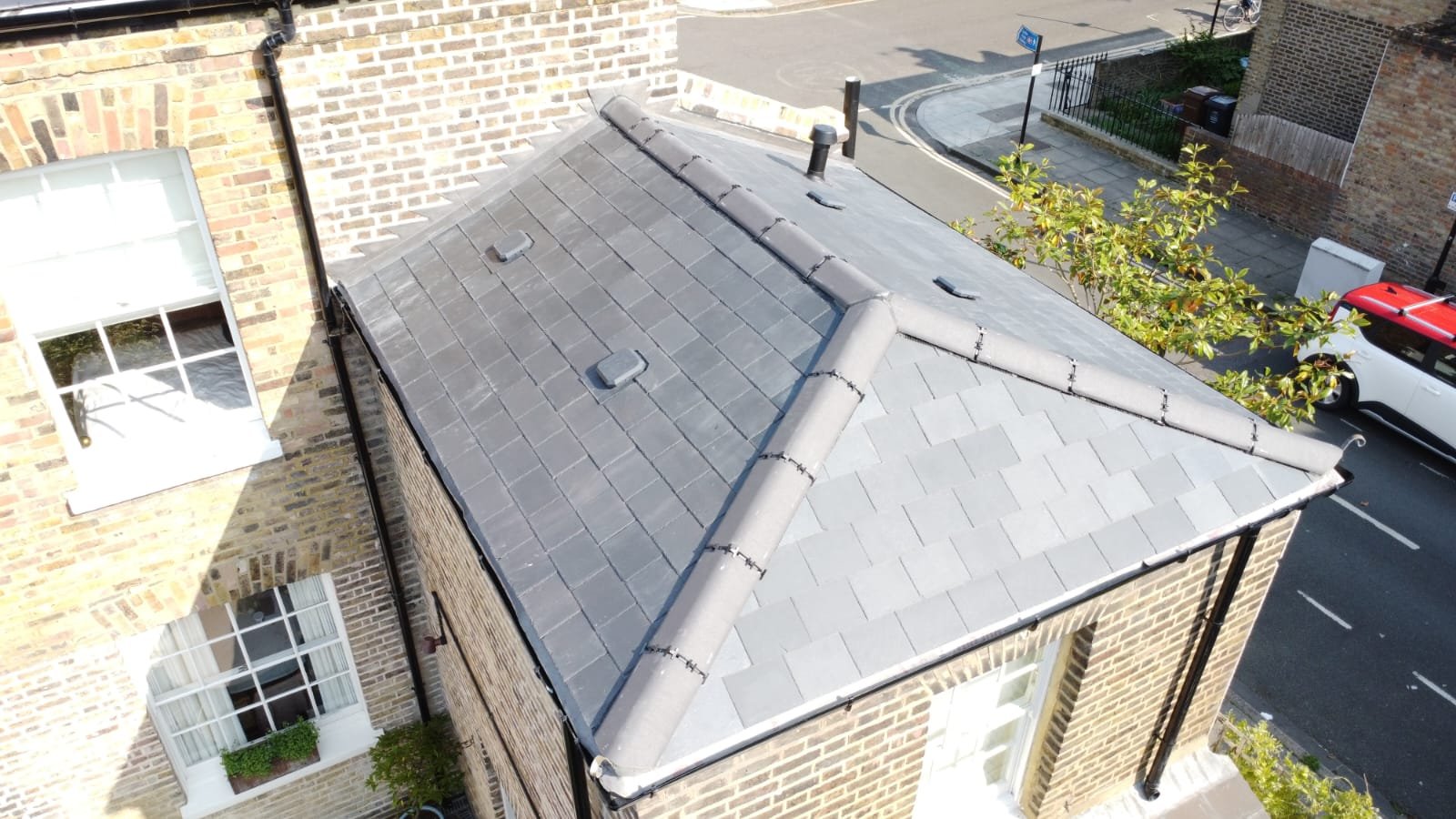
If a roofer has told you your house needs a roof replacement, you probably have a lot of questions. What is involved, how long will it take, and which material is right for a London period home? This guide explains the process step by step. It also covers slate versus tile, the rules on planning and Building Regulations, and how to compare quotes properly.
When does a roof need replacing?
A roof replacement is the right answer when the problem is no longer local. These are the signs we look for on London terraces:
- Slipped, cracked or flaking slates across whole slopes, not just one or two.
- Nail sickness, where rusted nails let slates slide out of place all over the roof.
- Felt that has perished, so the loft is damp or shows daylight.
- Leaks that keep returning in new places, even after repairs.
- Sagging between rafters, or battens that have rotted.
If the slates themselves are sound and the problem is local, a repair is usually the better option. Our guide to a leaking roof explains how roofers trace and fix individual leaks.
What a roof replacement involves
Every house is different, but a typical roof replacement on a London terrace follows the same steps:
- Survey: we inspect the roof up close, photograph what we find and explain the options.
- Access: scaffolding goes up. If it stands on the pavement, the council has to license it first, so we allow time for that.
- Strip: the old slates, battens and felt come off, and we check the rafters underneath.
- Repair timber: we replace any rotten battens or rafters before the new roof goes on.
- New roof: breathable membrane, new battens, then the new slates or tiles, ridge and verges.
- Leadwork: we renew flashings, valleys and parapet gutters while the scaffold is up.
- Sign-off: building control notification where needed, then a final clean and inspection.
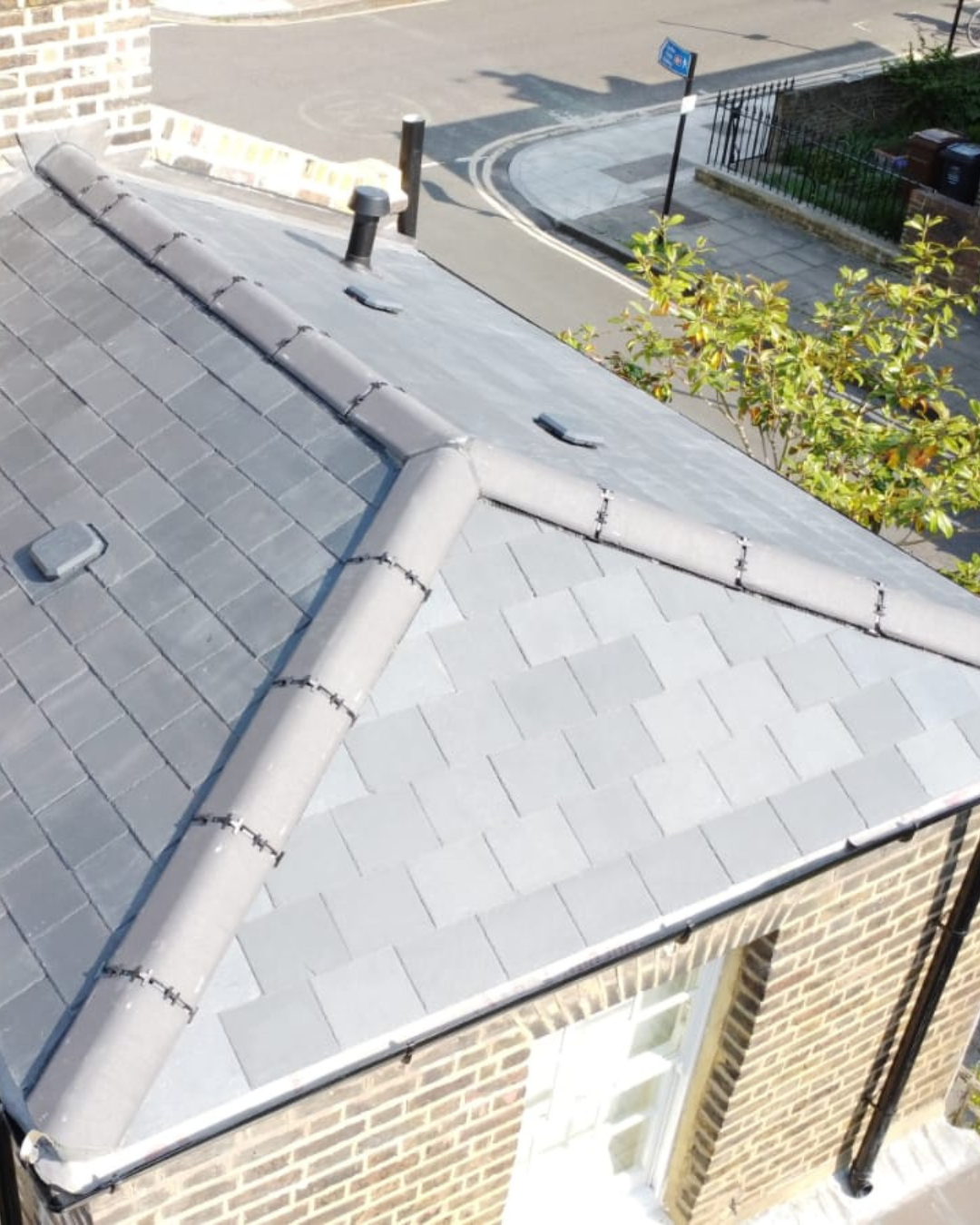
Natural slate vs concrete tile for a period roof replacement
Concrete tiles are common on newer houses, but they are much heavier than slate. They also change how a Victorian terrace looks from the street. A new covering that is significantly heavier than the old one needs Building Regulations approval, because the roof structure may need strengthening.
So on a period house, natural slate is usually the better long-term choice. It is lighter than concrete, it suits the street, and in a conservation area planners often expect it. You can see the finish on our Victorian slate roof restoration in Islington and our natural slate roof replacement projects.
★★★★★
“We recently had a new slate roof installed and it was a really positive experience. The team were professional, turned up when they said they would, and kept things tidy throughout the job, which we appreciated.”
Mariangela C. · Google review, 2026
Roof replacement on a London terraced house
A London terrace often has more going on than first appears. For example, it may have a main roof, a hidden valley or butterfly roof behind a parapet, and a separate roof over the back addition. Each is effectively its own job, so a good survey looks at all of them.
- Chimneys: stacks that need repointing or rebuilding are easier to deal with while the scaffold is up. See our chimney repair guide.
- Leadwork: parapet gutters, valleys and bay roofs often need renewing at the same time. Our bay window roof guide explains why.
- Back additions: the flat roof over a rear extension can be replaced in the same programme. See flat roof repair or replacement.
Do you need permission for a roof replacement?
- Planning permission: like-for-like re-roofing usually doesn’t need it when the work doesn’t materially change how the house looks. In a conservation area, however, check with the council first.
- Building Regulations: if more than half of the roof is renewed, building control approval is normally needed. The roof will also need upgrading to current insulation standards where that is practical.
- Listed buildings: like-for-like replacement matching the original normally doesn’t need listed building consent. But changing the type of slate or tile is likely to.
How long does a roof replacement take?
Generally, a simple roof on a small house takes a few days once the scaffold is up. A London terrace with natural slate, leadwork, chimneys and a back addition often takes one to several weeks. The weather matters too, and so does what we find once the old covering comes off.
How to compare roof replacement quotes
Two quotes for “a new roof” can describe very different jobs, so look closely at what each one includes:
- Photos of the current roof and what the roofer actually found.
- The exact material, for example Spanish or Welsh slate, and the slate size.
- Breathable membrane, battens, ridge and verge details.
- Leadwork: flashings, valleys and gutters, with the lead code specified.
- Chimney work, scaffold, pavement licence and waste removal.
- How hidden timber repairs will be handled if found.
- Building control notification and any insulation upgrade.
- The programme, and what happens if the weather turns.
★★★★★
“Extensive roof removal and replacement began in April 2023. From day one the BARL team were accessible, honest, and easy to work with. The highly skilled labourers were respectful, friendly, efficient and always tidied up at the end of the day. I am extremely happy with totally watertight, properly insulated and incredibly smart new roofs.”
Maya H. · Google review, 2023
We replace and restore roofs across Islington, Hackney and the rest of North, East and Central London. See our roofing services for more.
Where we work in London
Frequently asked questions
Signs include slipped or flaking slates across whole slopes, rusted nails letting slates slide, perished felt, daylight in the loft and leaks that keep returning after repairs. A roofer should inspect up close and show you photos before recommending a full roof replacement.
A simple roof on a small house can take a few days. A London terrace with natural slate, leadwork, chimneys and a back addition often takes one to several weeks, depending on the weather and what is found once the old covering is removed.
Usually not, if the work is like-for-like and doesn’t materially change the appearance. In a conservation area or on a listed building, check with your council first. Building Regulations approval is normally needed if more than half of the roof is renewed.
Repair is usually better when the problem is local and the slates are sound. Replacement makes more sense when slates, nails and felt are failing across the roof or you keep needing repairs. A roofer should explain both options.