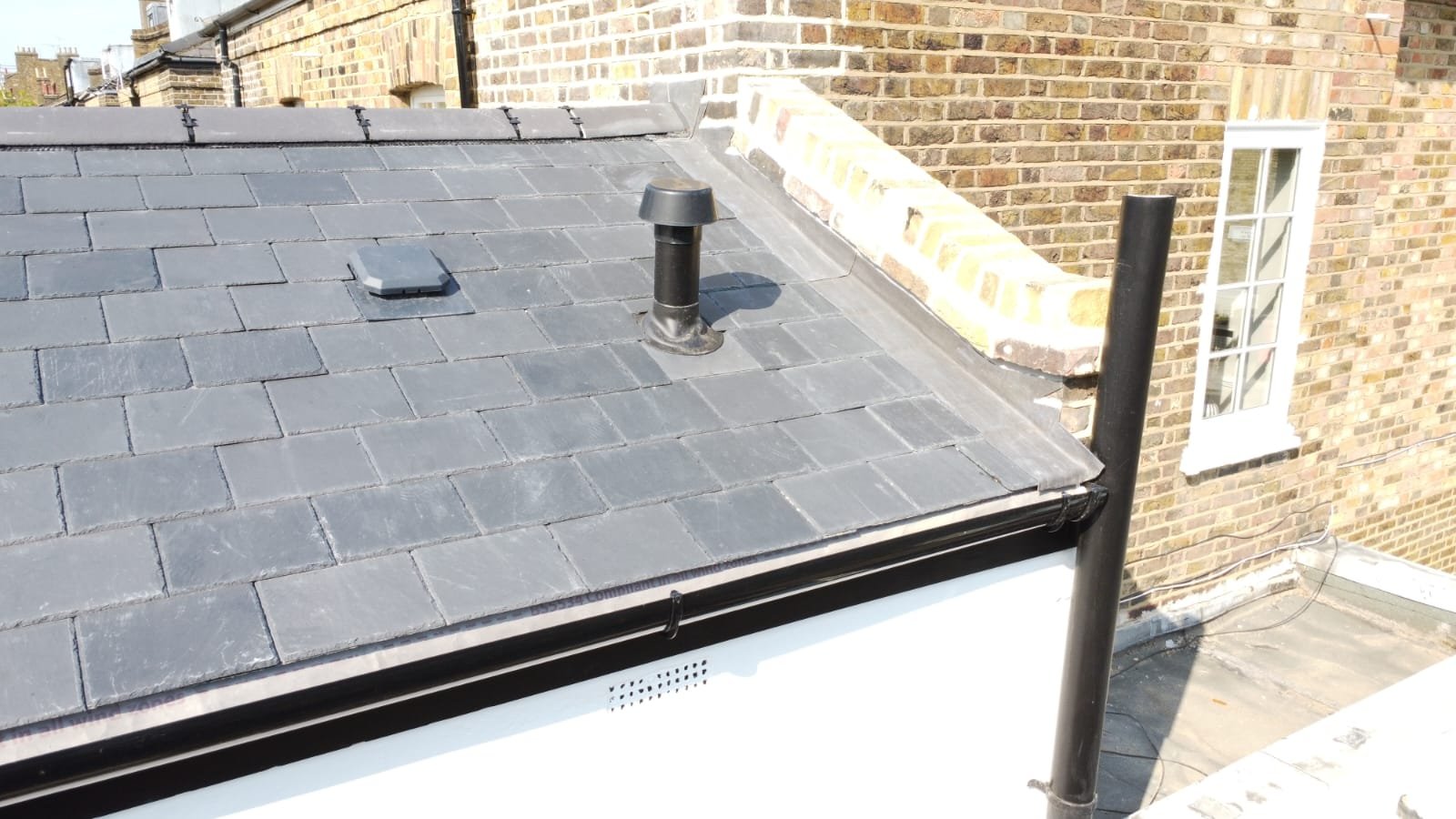
Puddles that never drain, blisters in the felt and a stain on the ceiling under the back extension are all early warnings. The question, then, is whether yours needs a repair or a full flat roof replacement. This guide explains the signs, compares felt, GRP fibreglass and EPDM rubber, and covers the insulation rules that apply when you replace a flat roof in London.
Signs you need a flat roof replacement, not a repair
| Usually a repair | Usually a replacement |
|---|---|
| One small split, tear or lifted seam | Cracking, blistering or crazing across the whole surface |
| Failed flashing where the roof meets a wall | Leaks in several places, or leaks that return after repairs |
| A blocked outlet causing a single puddle | Large areas of standing water because the roof has sagged |
| A fairly young roof that is otherwise sound | A soft or spongy deck underfoot, a sign of wet or rotten boards |
General guidance only. Therefore, a survey, ideally including a check of the deck from inside, will confirm which applies.
Flat roof repair options
- Patching: for example, cutting out and patching a local split or blister in felt, or bonding a repair onto GRP or EPDM.
- Re-sealing details: renewing the flashing or upstand where the roof meets a wall, since this is the source of many leaks.
- Clearing and improving outlets: clearing blocked outlets and adding new ones whenever water collects.
- Liquid coatings: a liquid rubber or resin coating over a sound but tired surface can also extend its life.
★★★★★
“Very happy with the quality of work done to the flat roof. Lee and David were both responsive and took time to explain the full detail of the repair as well as providing updates on the works. After several heavy rains there are no new leaks on my ceiling, so I can highly recommend BARL's services.”
Robert K. · Google review, 2023
GRP fibreglass vs felt vs EPDM rubber
| Felt (torch-on) | EPDM rubber | GRP fibreglass | |
|---|---|---|---|
| Finish | Mineral or plain bitumen | Single seamless black sheet | Hard, seamless, coloured topcoat |
| Good for | Garages and simple roofs | Simple shapes, low maintenance | Roofs with foot traffic and complex details |
| Watch out for | More joints, shorter life | Sharp objects can puncture it | Must be laid in dry conditions |
So for most London rear extensions, dormers and roof terraces, we recommend GRP or EPDM over traditional felt, because they generally last longer. GRP is especially good when people walk on the roof or where there are lots of upstands, parapets and outlets to detail.
★★★★★
“BARL installed a GRP flat roof for me at the start of Feb. From first communication to site inspection, quotation and job completion these guys were brilliant. They answered all of my questions and reassured me when needed.”
Louise T. · Google review, 2021
Warm deck vs cold deck: why insulation matters
Older London flat roofs are generally “cold decks”, with insulation (if any) between the joists and a ventilated gap above. Instead, a “warm deck” puts insulation boards on top of the deck, under the waterproofing. As a result, the structure stays warm and dry and avoids condensation.
When you replace the waterproofing on a flat roof over a heated room, Building Regulations treat this as renovating the roof. You’ll normally need to upgrade the insulation to current standards, unless that isn’t practical. In practice, a flat roof replacement therefore usually means converting to a warm deck. It also means the room underneath feels noticeably warmer in winter. Roofers in a competent person scheme can self-certify this work. Otherwise, building control will need to sign it off.
Case study: warm-deck GRP flat roof replacement in Islington
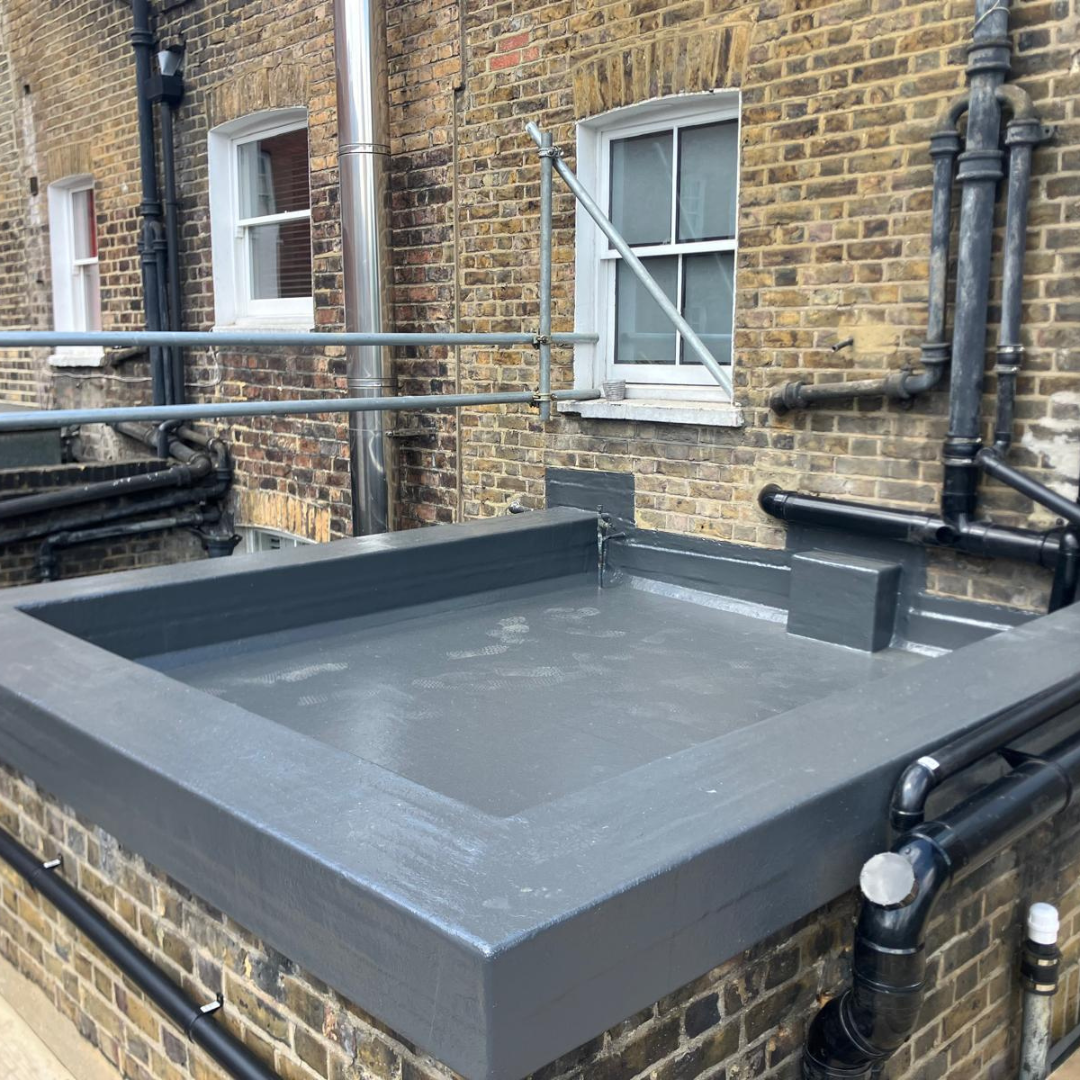
On this Islington and Highbury flat roof replacement, we first stripped a failing roof back to the joists. We then installed a new warm-deck GRP fibreglass system with fresh insulation and fully detailed upstands. Read the full project write-up.
★★★★★
“BARL has installed a GRP fibreglass roof + GRP-capped fibreglass parapet walls, and the transformation is remarkable. The process was smooth and efficient. This investment was worth it and the BARL team is very competent.”
Isabelle · Google review, 2025
Is your flat roof leaking now? Our guide to a leaking roof covers what to do first. We also repair and replace flat roofs across Islington, Highbury, Dalston and the rest of North, East and Central London. See our roofing services.
Where we work in London
Frequently asked questions
A well-installed GRP fibreglass flat roof can last for decades. However, lifespan depends on the quality of installation, the detailing at edges and upstands, and whether the roof gets foot traffic. Regular checks of outlets and flashings help it last longer.
Often, yes. A roofer can usually repair local splits, lifted seams, failed flashings and blocked outlets. If the deck underneath is soft or the roof leaks in several places, a flat roof replacement is usually the better option.
Replacing the waterproofing over a heated room normally counts as renovating the roof, so the insulation needs upgrading where practical. A roofer in a competent person scheme can self-certify this. Otherwise, building control will need to approve the work.
Both generally last longer than felt. EPDM is a single rubber sheet that especially suits simple roof shapes. GRP gives a hard, seamless finish that copes better with foot traffic and complex details such as parapets and outlets. The right choice depends on the roof and how you use it.