
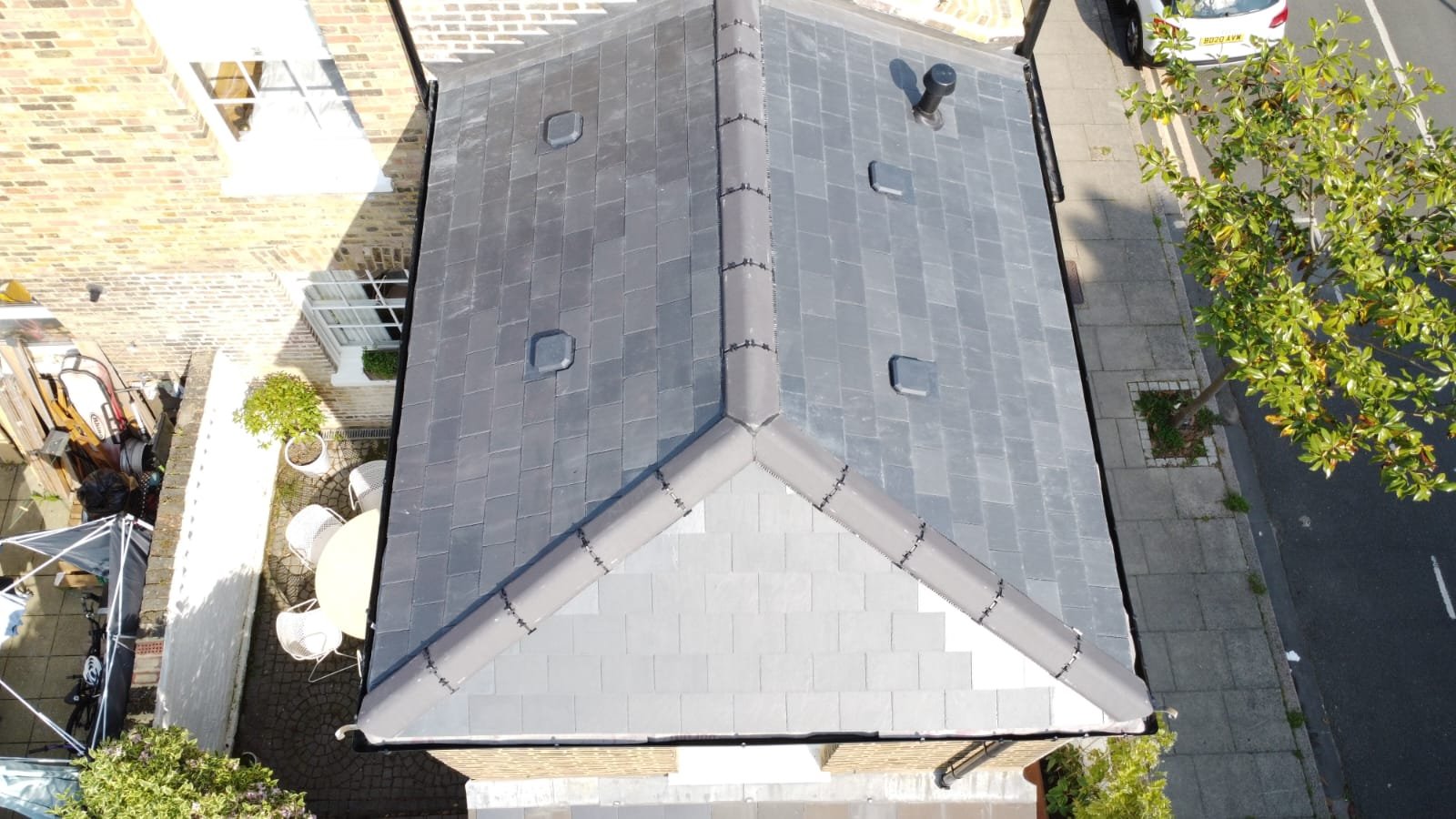
Most roof problems on London homes start small: a slipped slate, a cracked flashing or a blocked gutter behind a parapet. Caught early, they can usually be repaired without replacing the whole roof. Left alone, the same problems let water into timbers, ceilings and walls. This guide covers the most common roof repairs on London houses and flats, how to tell whether a repair or a replacement is the better option, and what to expect when a roofer comes out.
The most common roof repairs on London homes
London has a huge variety of roofs, but the same handful of problems account for most repair calls. Victorian and Edwardian terraces usually have natural slate roofs with lead valleys and parapet gutters, while later houses, extensions and mansion blocks often have tiled or flat roofs.
Slipped, cracked or missing slates and tiles
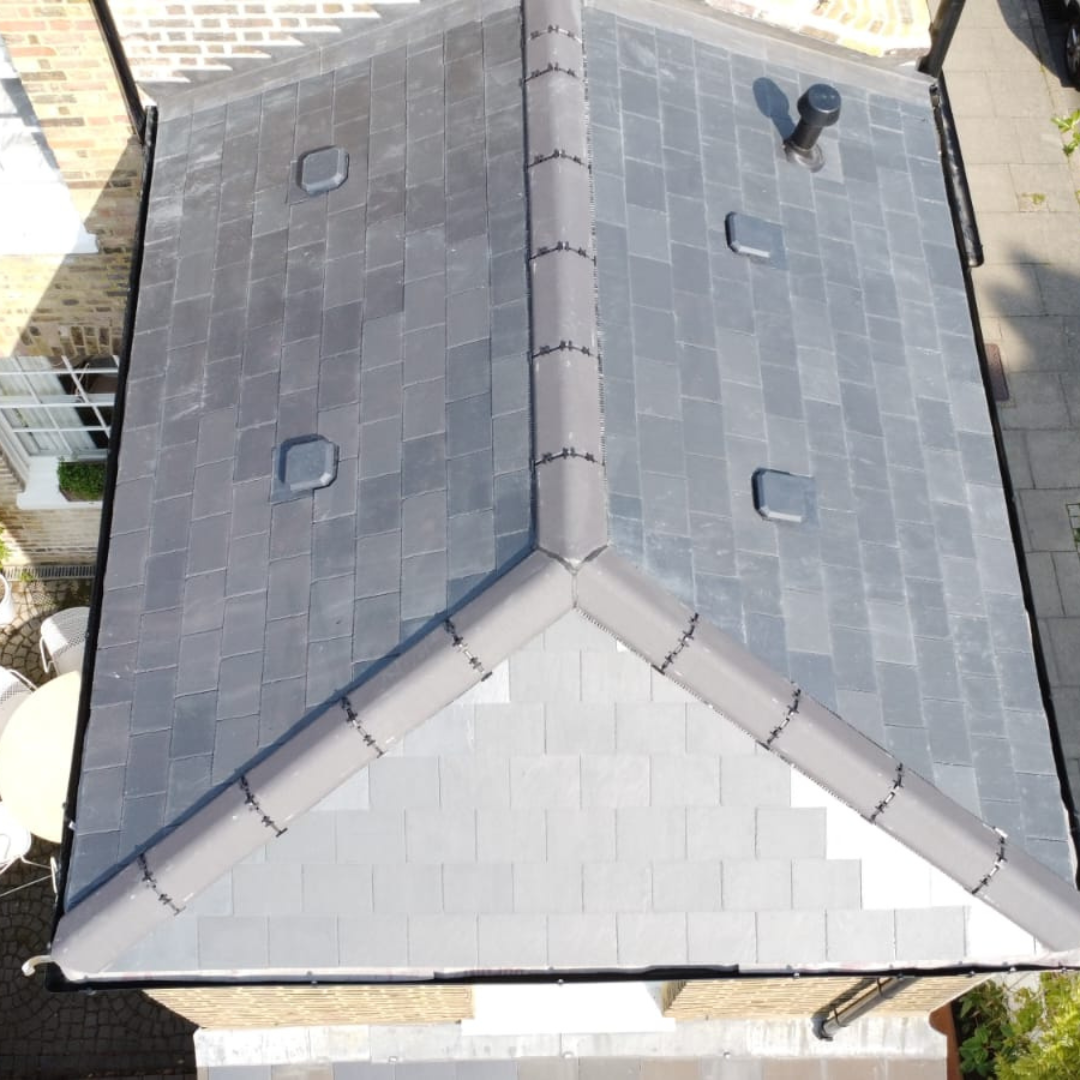
Slates slip when the nails holding them corrode, a problem known as nail fatigue. Tiles crack with age, frost or foot traffic. Individual slates and tiles can be refixed or replaced with matching ones, using clips or tingles where the roof cannot be stripped. Where slates are slipping across the whole roof, see our guide to natural slate roofing.
Lead flashings, valleys and parapet gutters
Lead seals the joints where the roof meets chimneys, walls and dormers, and lines the valleys and hidden gutters behind parapets. Over time lead can split, lift or wear thin, and mortar pointing holding it in place can crumble. Many leaks on period houses come from these details rather than from the slates.
Chimney stacks
Chimneys are the most exposed part of most London roofs. Common repairs include repointing, rebuilding loose brickwork, resetting chimney pots and renewing the lead flashing around the base. Our chimney, lead flashing and parapet wall guide covers these in more detail.
Flat roofs on extensions, dormers and bays
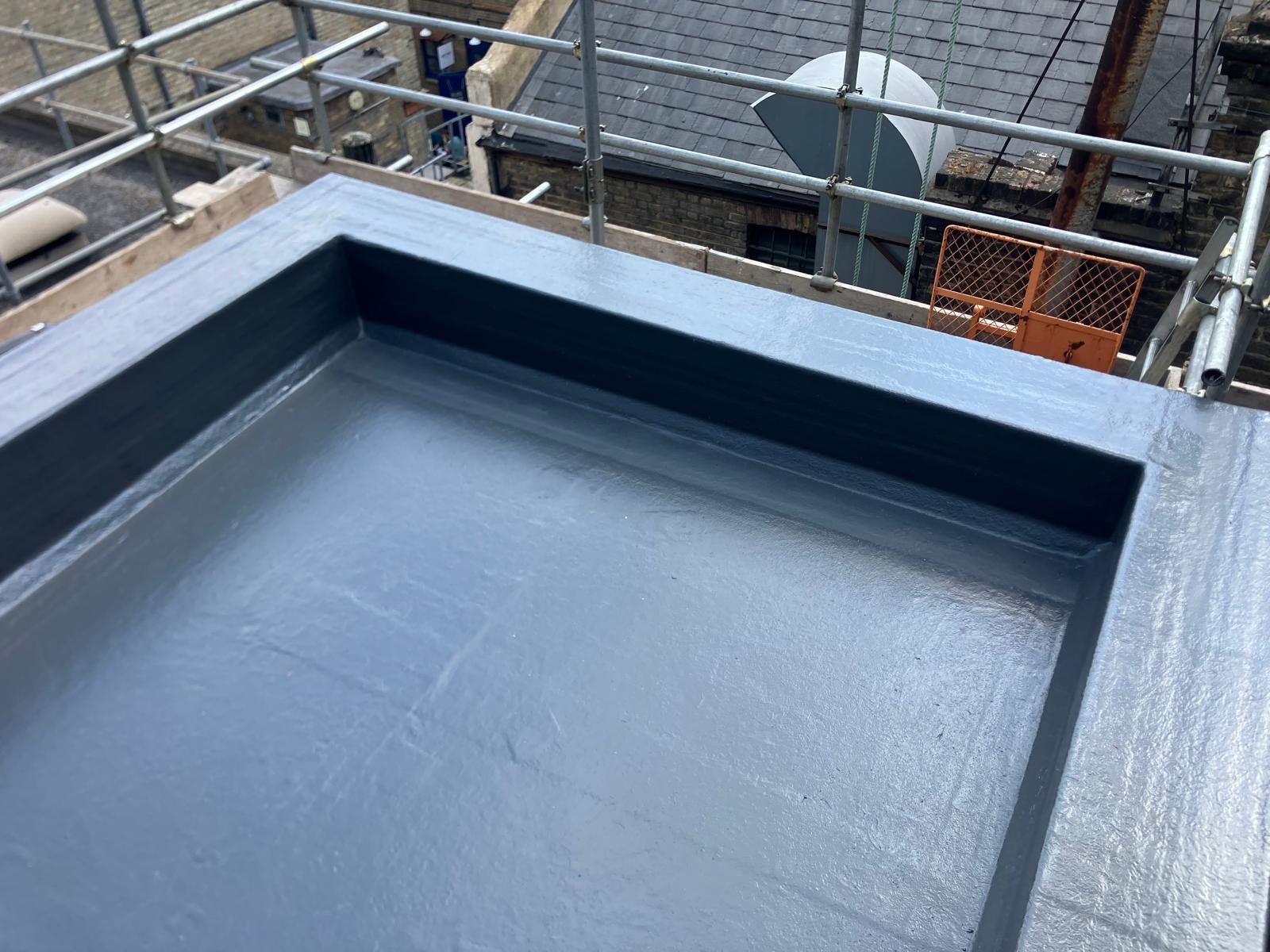
Felt, asphalt and fibreglass flat roofs fail at the edges and joints first, or where water ponds. Small splits and blisters can often be repaired, but an old flat roof with repeated leaks is usually better replaced. See flat roof repair or replacement and our guide to lead bay window roofs.
Gutters, outlets and downpipes
Blocked gutters and outlets are one of the simplest causes of leaks and damp walls, especially on roofs with hidden gutters behind a parapet. Clearing them, resealing joints and checking that water drains away properly is often part of any roof repair visit.
Signs your roof needs repairing
- Damp patches or staining on top-floor ceilings or chimney breasts.
- Slipped, cracked or missing slates or tiles, or pieces in the gutter.
- Lead flashings that have lifted, split or come away from the wall.
- Water overflowing from gutters or running down the front of the building.
- Moss, plants or debris building up in valleys and gutters.
- On flat roofs: splits, blisters, standing water or a spongy feel underfoot.
Repair or replace?
A repair makes sense when the problem is limited to one area and the rest of the roof is sound. Replacement is usually better value when faults keep coming back or are spread across the roof. Things a roofer will look at include:
- How many slates or tiles are slipping, and whether the nails have corroded across the roof.
- The condition of the battens, felt or underlay underneath.
- Whether the roof has sagged or the timbers are damp.
- How many patch repairs have already been made.
- The age and condition of lead valleys, gutters and flashings.
If replacement is the better option, our roof replacement guide explains what is involved.
How a roof repair is carried out
- Survey: the roof is inspected, safely accessed where needed, and photographed so you can see the problem.
- Written quote: the fault, the repair and the materials are set out clearly before any work starts.
- Access: small repairs may only need ladders or a roof ladder; larger work, chimneys and upper floors often need a tower or scaffolding, which may require a council licence.
- Repair: slates, tiles, lead and mortar are replaced to match the existing roof, which is especially important in conservation areas.
- Final checks: gutters and outlets are cleared and checked, and photos of the finished work are shared with you.
Emergency and temporary roof repairs
If water is coming in during bad weather, the first step is to protect the inside of the property: move belongings, catch drips and turn off electrics near the leak if it is safe to do so. A roofer can then make the roof watertight with a temporary repair or tarpaulin until a permanent repair can be done in suitable weather. Our guide on what to do if your roof is leaking has a step-by-step checklist.
Roof repairs in conservation areas and listed buildings
Much of inner London is covered by conservation areas, where councils expect roofs to keep their original materials and appearance. Like-for-like repairs, such as replacing natural slate with natural slate and renewing lead in lead, do not normally need planning permission. Changing materials or the shape of the roof may need permission, and listed buildings can need listed building consent even for some repairs. See our guide to listed building restoration.
Choosing a roofer in London
- Ask for a written quote that describes the fault and the repair, not just a price.
- Ask to see photos of the problem before work and of the finished repair.
- Check the company is insured and belongs to a recognised trade body. BARL is a member of the Federation of Master Builders and TrustMark.
- Be wary of cold callers who knock on the door saying they have spotted a problem with your roof.
- Choose a roofer who will tell you honestly when a repair is enough and when it is not.
Where we work in London
Roof repair FAQs
Water often travels along timbers before it shows on a ceiling, so the stain is not always below the fault. A roof survey checks slates, lead, chimneys and gutters to find the actual source.
Yes. Individual slipped, cracked or missing slates and tiles can be refixed or replaced with matching ones without stripping the roof.
Not always. Small repairs can often be done from ladders or a roof ladder. Chimney work, upper floors and larger repairs usually need a tower or scaffolding.
Many repairs can be done in winter on dry days. In wet weather a temporary repair can keep water out until a permanent repair is possible.
Like-for-like repairs do not normally need planning permission. Changes to materials or roof shape may, and listed buildings can need consent, so check with your council if you are unsure.


