
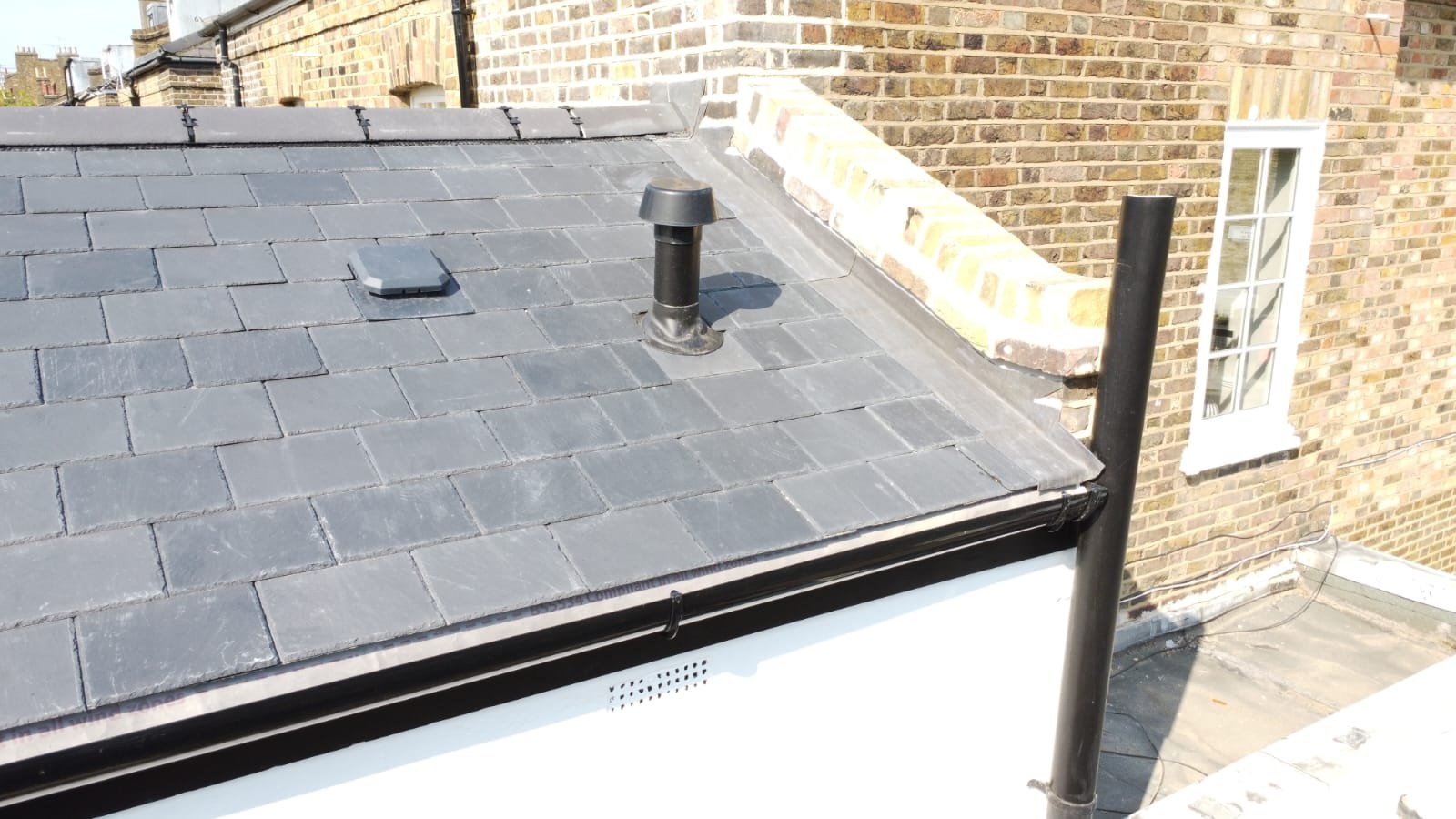
Natural slate is the classic roof of London. Most Victorian and Edwardian terraces in Hackney, Islington and Camden were built with it, and a good slate roof can last for generations. Slates themselves rarely fail first; it is usually the nails, battens, flashings and underlay that give up. This guide explains how natural slate roofs work, when repairs are enough, when a full re-roof makes sense and what to expect from the work.
Why natural slate suits London homes
Natural slate is dense, fire-resistant and very low in water absorption, so good-quality slates can outlast several sets of nails and battens. It is also thin and light compared with concrete tiles, which matters on older roof structures that were never designed for heavy coverings. Its colour and texture are a big part of the look of London streets, which is why conservation areas protect it.
Signs your slate roof needs attention
- Slipped or missing slates, or slates lying in the gutter.
- Small metal strips (tingles) holding lots of slates in place – a sign of earlier patch repairs.
- Damp patches on top-floor ceilings or in the loft after rain.
- Daylight visible through the roof from the loft.
- A dipping or uneven roof line.
- Cracked or loose lead at valleys, chimneys and parapets.
Repair or replace?
If only a handful of slates have slipped and the rest are sound, a repair is usually the right answer. Slipped slates are refixed with copper or stainless steel tingles or hooks, cracked slates are replaced with matching reclaimed or new slates, and any failed flashings are renewed.
When slates are slipping across the whole roof, the original nails have usually corroded – often called nail fatigue. Patching one slate at a time then becomes a cycle of repeat call-outs. At that point it is normally better value to strip the roof, replace the battens and underlay, and relay the sound original slates with new ones made up to match, or re-roof entirely in new natural slate. See our roof replacement guide for how that process works.
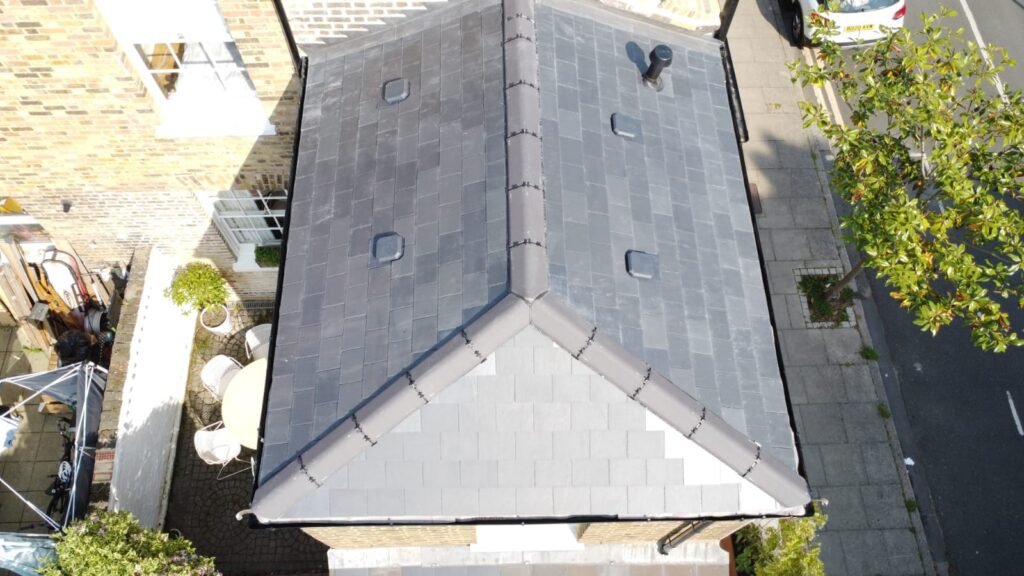
Welsh, Spanish and reclaimed slate
- Welsh slate – the original slate on many London houses. Very durable with a distinctive blue-grey colour; often expected on listed buildings.
- Spanish slate – widely used today; good-quality Spanish slate is a durable, more affordable choice for many period homes.
- Reclaimed slate – salvaged slates that match the size and colour of an existing roof, ideal for repairs and for keeping a consistent look.
The right choice depends on the building, the conservation-area rules and the budget. We advise on this during the survey.
How a slate re-roof is done
- Scaffolding is put up, with any licences arranged.
- The old slates are carefully stripped, and sound slates are set aside for reuse.
- Rafters are checked and repaired, and new breathable underlay and treated battens are fitted.
- Slates are relaid with the correct overlap and fixed with copper or stainless steel nails or hooks.
- Lead valleys, flashings and soakers are renewed where needed, and ridges and hips are rebedded or dry-fixed.
- Gutters are cleared and the roof is checked and photographed before the scaffold comes down.
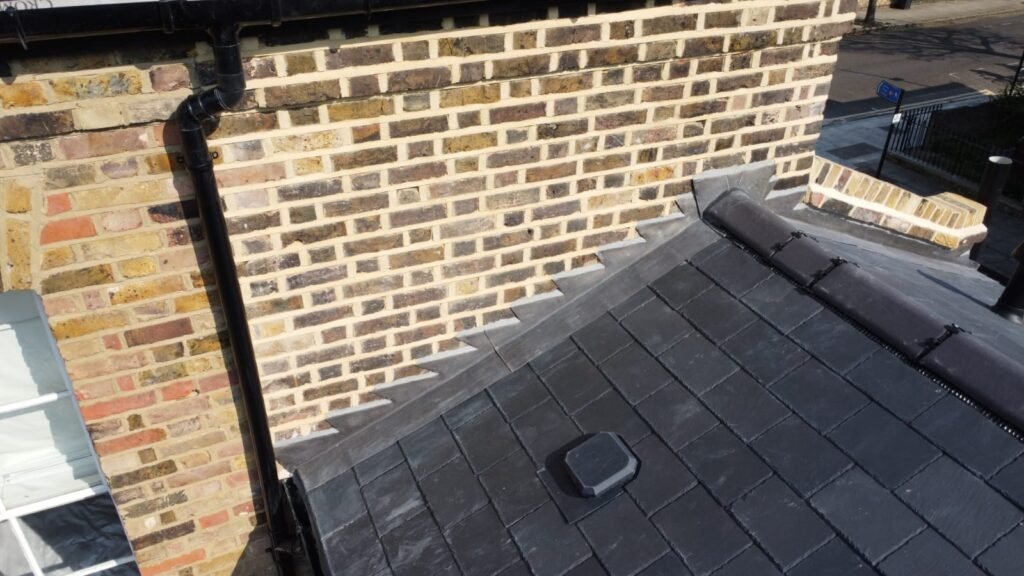
Slate roofs in conservation areas and on listed buildings
Large parts of Islington, Hackney, Camden and Westminster are conservation areas. Councils usually expect natural slate to be replaced with natural slate of a similar size and colour, and listed buildings may need consent. Concrete or fibre-cement tiles are rarely acceptable on the front of a period house. Read more in our guide to listed building restoration.
Natural slate roofing across London
BARL repairs and replaces natural slate roofs across North, East and Central London, including the leadwork and chimney details that go with them. See our roofing services, recent work such as a Victorian slate roof restoration in Islington and a natural slate roof replacement, or our local guide to slate roofing in Hackney.
Where we work in London
Frequently asked questions
Good-quality natural slate can last well over a century. The nails, battens and underlay usually fail first, which is why many old London slate roofs are re-laid with new fixings rather than having every slate replaced.
Yes. Individual slipped or cracked slates can be refixed or replaced with matching slates. If slates are slipping all over the roof, the nails have usually corroded and a re-roof is often better value.
Often, yes. Sound original slates can be stripped, sorted and relaid, with reclaimed or new matching slates making up any shortfall. This keeps the roof’s character and is preferred in conservation areas.
Both can be excellent. Welsh slate is very durable and often expected on listed buildings; good-quality Spanish slate is widely used and more affordable. The right choice depends on the building and any council requirements.
Like-for-like replacement usually doesn’t need planning permission. Listed buildings normally need consent, and conservation areas may have rules on materials, so check with your council before work starts.


