A leaking roof is one of the most stressful things that can happen in a home, and it always seems to start on a Friday night. The good news is that most leaks in London houses come from a small number of well-known weak spots. So a roofer can usually fix them without replacing the whole roof. This guide covers what to do in the first hour, the six most common causes we find on Victorian and Edwardian terraces, and how to tell when a patch is no longer enough.
Leaking roof? What to do in the first hour
When you first spot a leaking roof, the aim is simple: limit the damage, keep everyone safe and gather the evidence your roofer and insurer will need.
- Catch and contain the water. Use buckets, towels and a sheet of plastic under the drip. Also move furniture, electronics and rugs out of the way.
- Think about electrics. If water is coming through or near a light fitting, switch off that lighting circuit at the consumer unit and don’t use the switch.
- Keep clear of a bulging ceiling. A ceiling holding water can come down suddenly, so keep people and pets out of the room.
- Photograph everything. Then capture the stain, the drip, the ceiling and any damaged belongings. Note the date, time and weather, because insurers will ask.
- Check the loft if it’s safe. A torch in the loft often shows wet timber or daylight near the source, which helps a roofer find the leak faster.
- Call a roofer, then your insurer. Report it quickly and keep receipts for any emergency work.
- Stay off the roof. Wet slates and lead are especially slippery, so leave it to a roofer with proper access equipment.
6 common causes of a leaking roof in London homes
London’s Victorian and Edwardian terraces share the same roof details, so they tend to fail in the same places. In Hackney, Islington and Camden these are the six we see most.
1. Slipped, cracked or missing slates
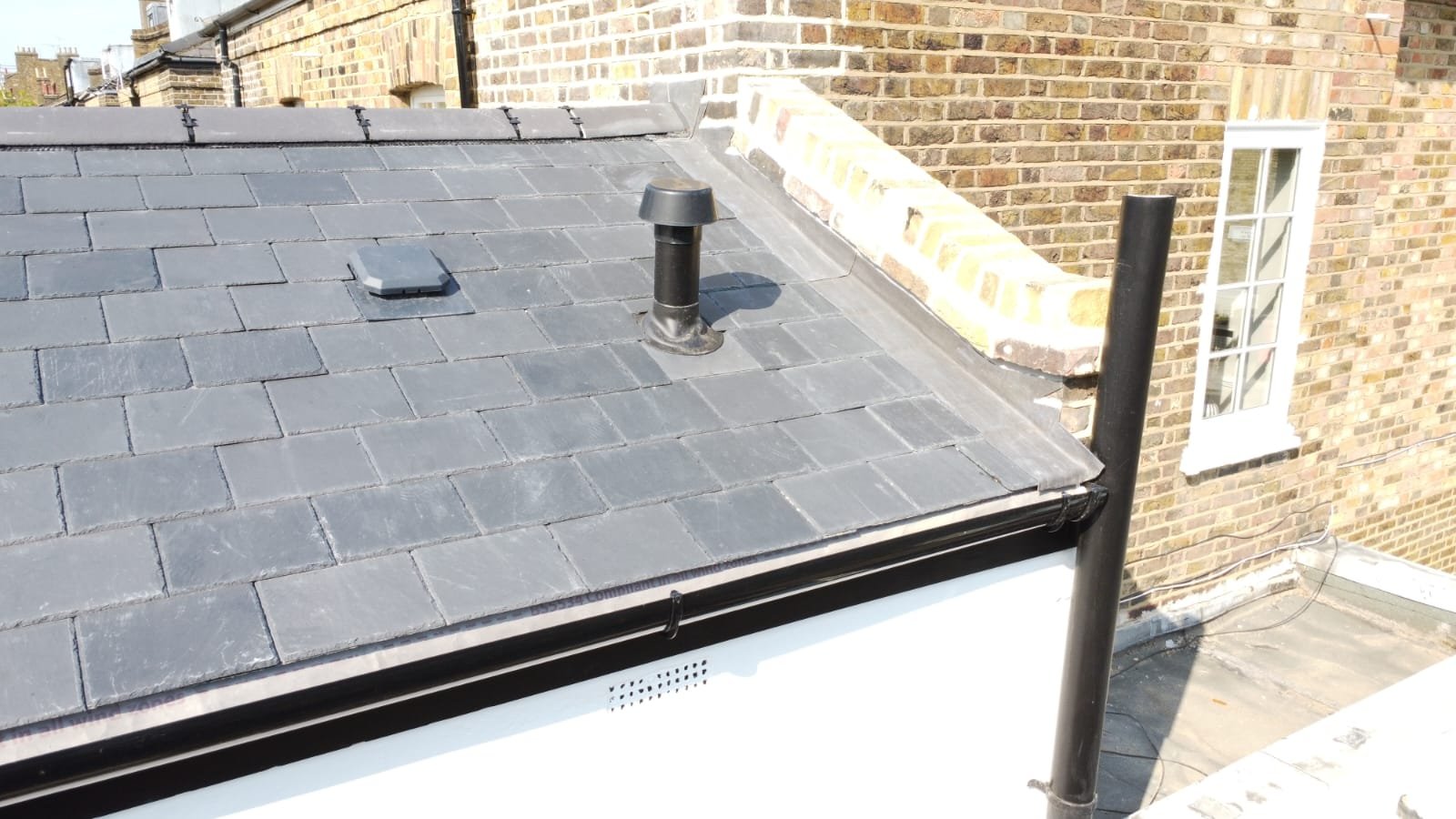
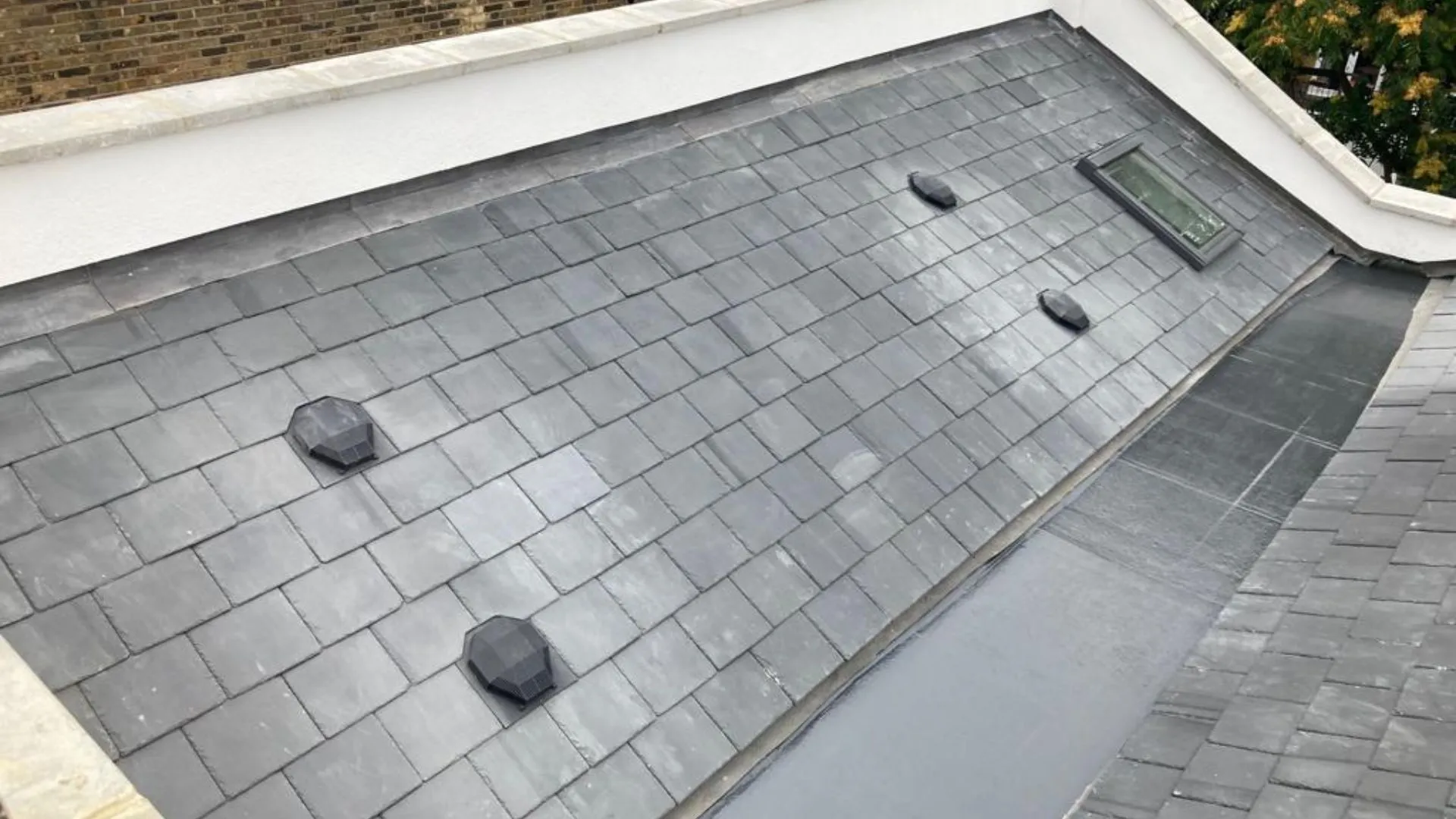
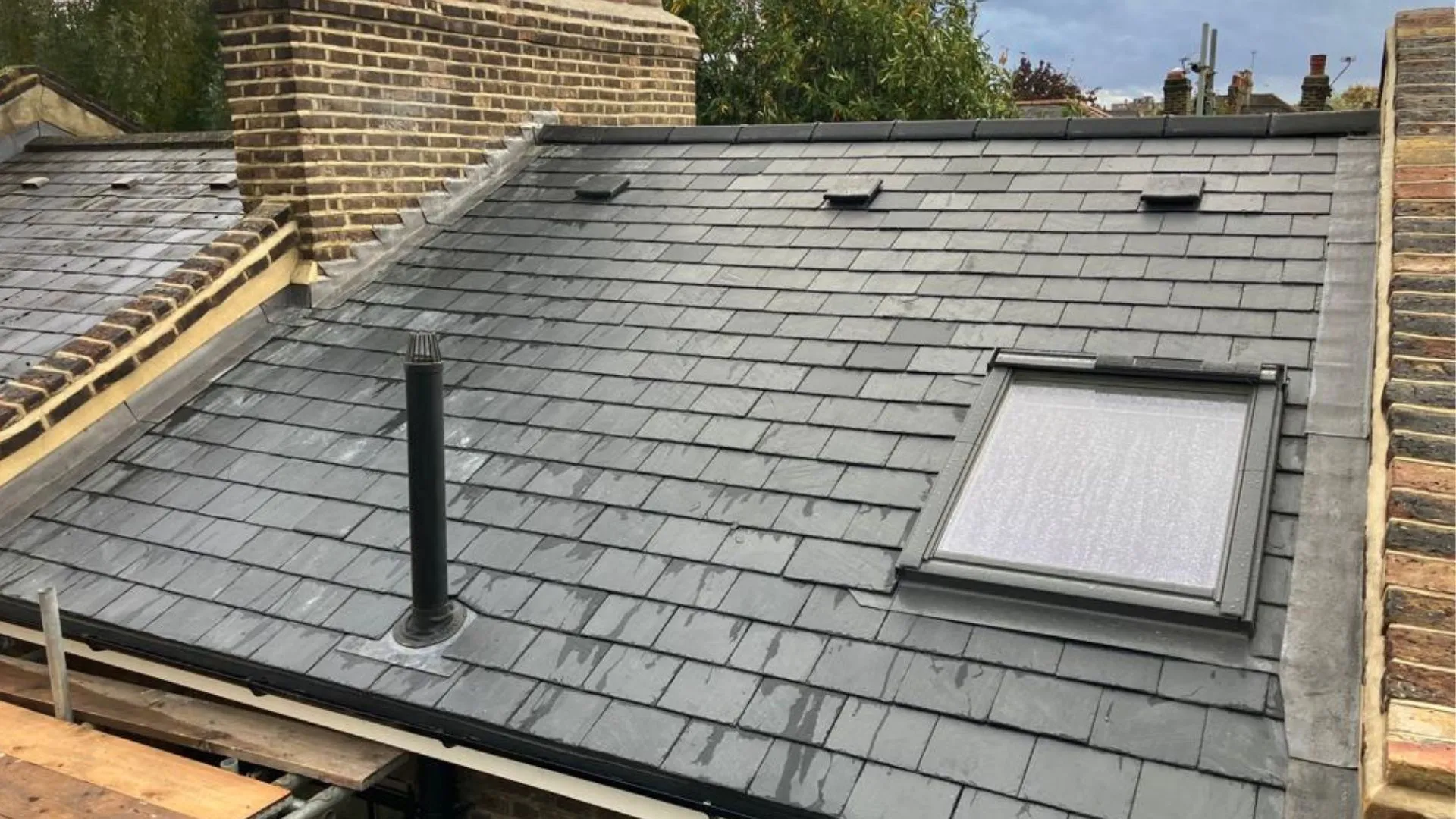
Natural slate lasts a very long time, but the nails holding it don’t. Roofers call this “nail sickness”: rusted nails let slates slide out of place. One slipped slate is enough to let rain run straight onto the felt or timbers below. A roofer can refix odd slates with metal clips (“tingles”). However, widespread slipping usually means the roof is near the end of its life, and our guide to roof replacement in London explains the next step.
2. Failed lead flashing at chimneys and walls
Wherever the roof meets brickwork, such as around a chimney stack or against a party wall, a strip of lead flashing keeps the joint watertight. Over time old lead splits and the mortar holding it falls out. In fact, some flashings were never lead at all, just a cement fillet that has cracked. Damp next to a chimney breast is the classic sign, and our chimney repair guide covers it in detail.
3. Blocked or worn valley gutters
Valleys are the channels where two roof slopes meet. They carry a lot of water and collect leaves and moss. On older houses, they also often have a lead lining that has worn thin. When a valley blocks, water backs up under the slates on either side.
4. Parapet and box gutters
Many London terraces hide their roof behind a front parapet wall, with a lead or asphalt gutter running behind it. If that gutter splits or the outlet blocks, water has nowhere to go but into the front bedroom wall. These leaks are easy to misdiagnose because nobody can see the gutter from the street.
5. Flat roof joints on rear extensions and dormers
The flat roof over a back addition or dormer is often the first place a leaking roof shows up. Felt blisters and cracks, joints open where the flat roof meets the main wall, and water pools where the fall is poor. Our guide to flat roof repair or replacement compares the options.
6. Blocked gutters, gullies and downpipes
Sometimes the roof covering is fine and the problem is drainage. A blocked hopper or gully lets water overflow back into the wall or ceiling. One customer had already paid another roofer to fix a leak that kept coming back, and the root cause turned out to be a failed gully:
★★★★★
“After a previous roofer failed to fix the issue, Barl quickly identified the root cause and resolved the leak by replacing my gully and carrying out additional repairs.”
Joe · Google review, 2026
How a roofer traces a leaking roof that others missed
In fact, water rarely drips straight down from the hole. It runs along felt, rafters and joists before it appears. That is why repeat leaks are so common when someone patches the spot directly above the stain. A proper diagnosis works from the inside out:
- Inside: where the stain is, how big it is, and whether it gets worse when rain comes from a particular direction.
- Loft: wet timbers, staining on the underside of the felt, or daylight around the chimney or party wall.
- Outside: slates, ridge, valleys, flashings, parapet gutters, outlets and the flat roofs behind, inspected up close rather than from the pavement.
- Testing: on stubborn leaks, running water over one section at a time until the leak shows itself.
This is why experience pays off with a leaking roof. Several of our customers came to us after other roofers had already tried:
★★★★★
“We have an unusual roof that three other companies had failed to render watertight. David was prompt, very thorough, honest about his approach and – unlike so many others – his team actually delivered on their early assurances. Our roof is now leak proof!”
Laura C. · Google review, 2024
★★★★★
“Had serious water ingress and after multiple amateur roofers trying to solve the problem I decided to go with a proper outfit. David and his team were very professional and sorted out the issue within a week in the hottest weather of the year.”
Henry B. · Google review, 2026
Repair or replace? When a leaking roof needs more than a patch
Generally, a one-off leak from a single slate or flashing is a repair. These signs, however, suggest it is time to talk about a larger repair or a new roof:
- Leaks keep coming back in different places after repairs.
- Lots of slipped or flaking slates across the slope, not just one or two.
- Daylight through the roof from the loft, or sagging between rafters.
- Lead in valleys or gutters that has cracked along its length rather than in one spot.
- A flat roof that still holds water even after several patches.
Every roof is different, so we inspect first and then give you a clear written quote. Where there is a choice, we explain the options side by side so you can decide.
Leaking roof repairs across North, East & Central London
We are based in Hackney (E9) and work on period homes every day across North, East and Central London. That includes Hackney, Islington, Camden, Highbury and the surrounding areas. See all our roofing services.
★★★★★
“BARL fixed my leaking roof. They were able to come over at short notice and quickly identified what the problem was. They got their team on the job really quickly and solved the problem.”
Ben W. · Google review, 2022
Where we work in London
Frequently asked questions
Call a roofer first to stop the water getting in, then call your home insurer to report it. Take photos before you move or repair anything. In North, East and Central London, BARL handles roof leak repairs 7 days a week on 0800 130 3632.
Leaks that only appear in heavy or wind-driven rain usually come from flashings, valleys, parapet gutters or outlets that overflow when they carry a lot of water. Slipped slates can also let rain in when wind drives it sideways. A close inspection usually finds the source.
A roofer can usually make a leak safe with temporary weatherproofing, such as sheeting, in wet weather. Permanent repairs to leadwork, membranes and mortar need dry conditions to bond and cure properly, so the roofer normally completes the full repair once the weather allows.
Buildings insurance often covers sudden storm damage, but generally not damage from wear and tear or a poorly maintained roof. Check your own policy, report the leak quickly and keep photos and receipts for any emergency work.