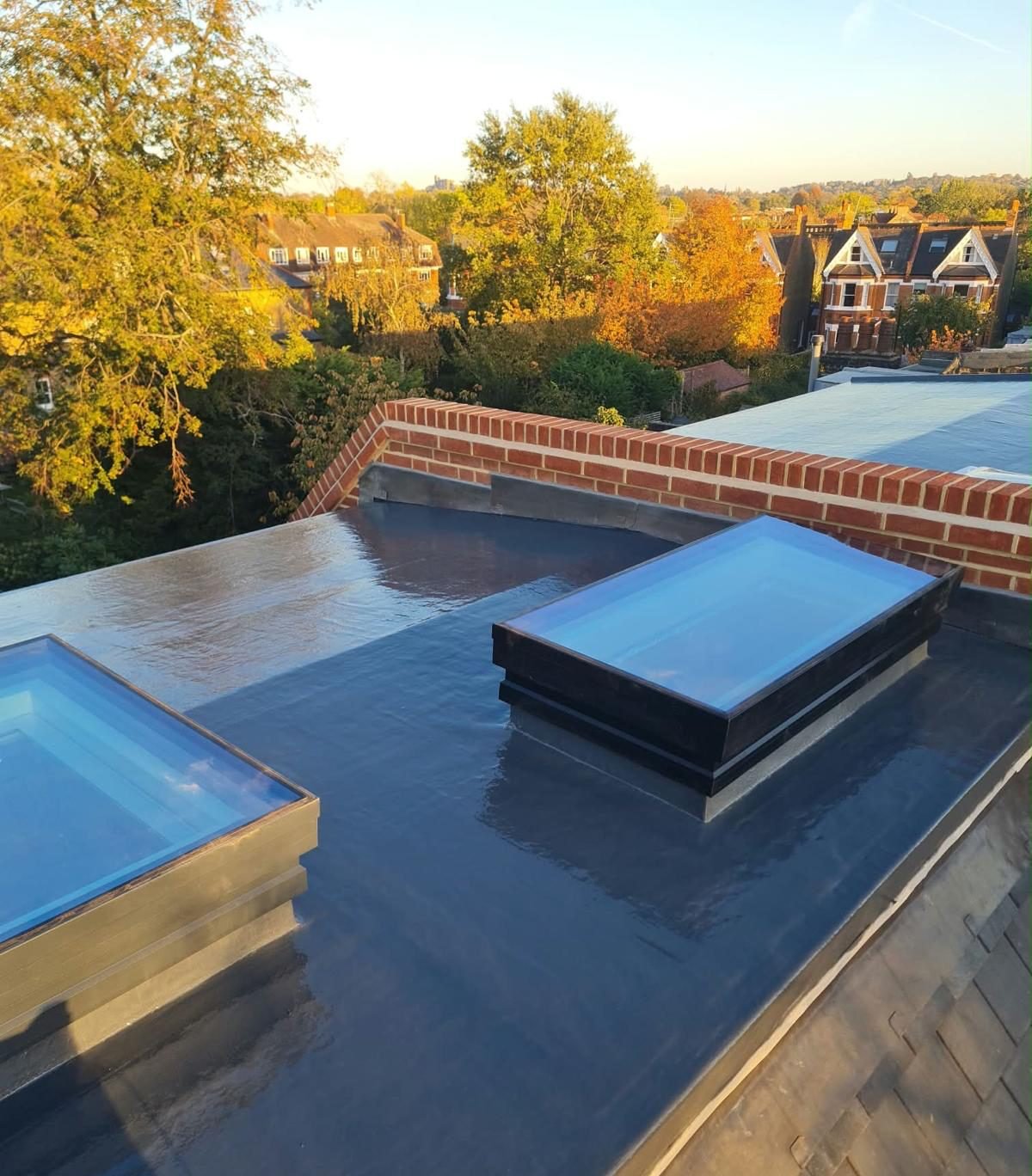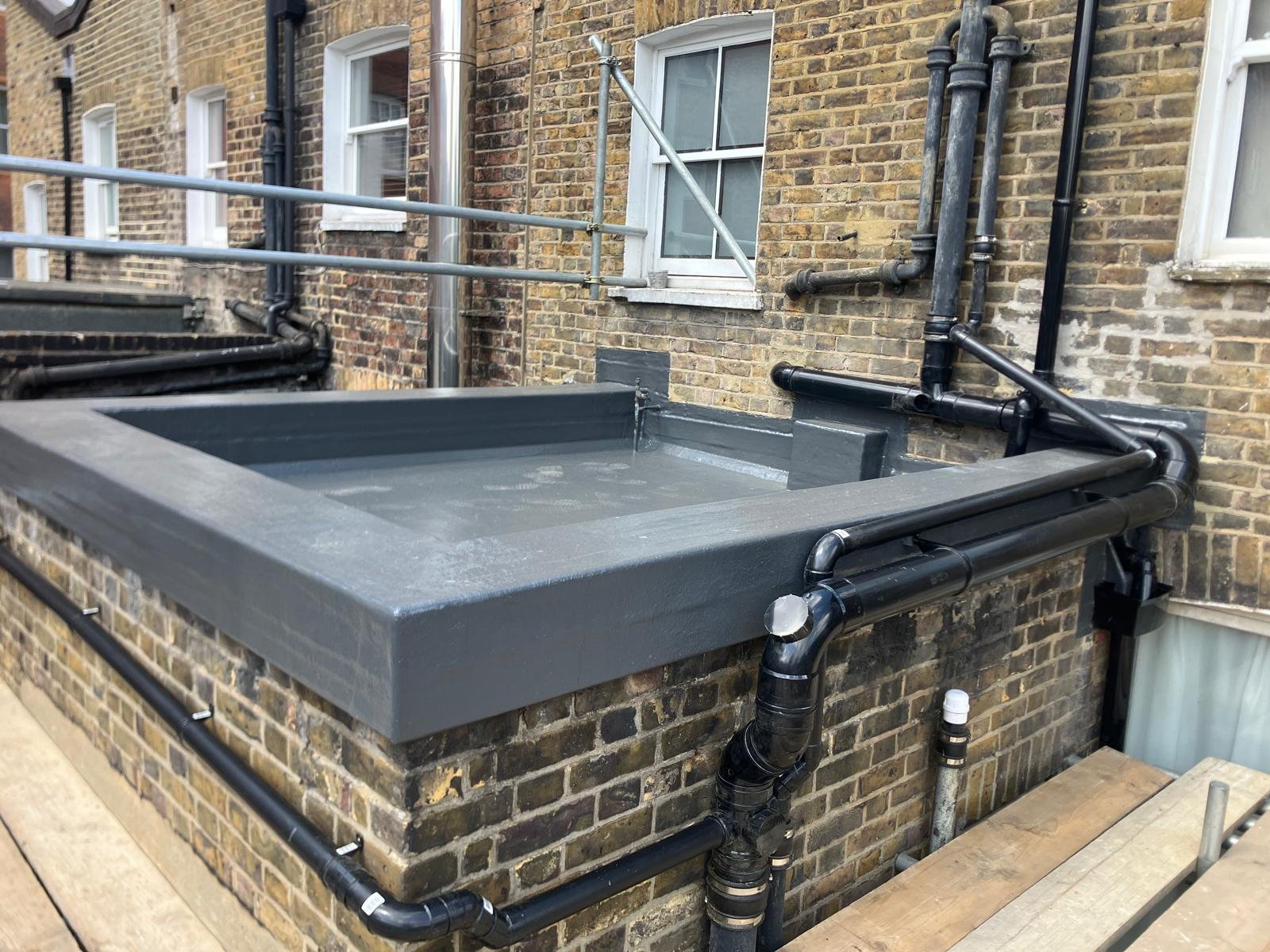
Water sitting on a flat roof after rain is one of the most common problems we are asked about on London homes. A little standing water that dries quickly is normal, but pools that stay for days wear out the roof covering, find their way through joints and add weight to the structure. This guide explains why flat roofs pond, when it becomes a problem, and how drainage is fixed, from clearing an outlet to re-roofing with proper falls.
Why water pools on a flat roof
Not enough fall
A “flat” roof should never be truly flat. It needs a slight slope, called a fall, to carry water to a gutter or outlet. Many older London extensions were built with little or no fall, and current guidance for new flat roofs aims for a finished fall of at least 1:80.
Sagging deck or joists
Over time, timber decking can soften with damp and joists can deflect, creating a dip where water collects. Once a dip forms, the extra weight of the water makes it slowly worse.
Blocked or badly placed outlets
Leaves, moss and debris block outlets and gutters, especially on roofs with a parapet. Sometimes the outlet is simply in the wrong place, higher than the lowest part of the roof.
Earlier patch repairs and overlays
Layers of patching, or a new covering laid over an old uneven one, can leave ridges and hollows that hold water.
Why ponding matters
- It wears out felt, asphalt and other coverings faster, especially at seams and laps.
- Water finds its way in at upstands, rooflights and outlets.
- Standing water adds weight to the roof structure.
- Pools encourage moss and debris, which block outlets further.
- In winter, freezing water puts extra stress on the covering.
How flat roof drainage is fixed
- Clear and check outlets: remove debris from outlets, gutters and downpipes and check they are not damaged or set too high.
- Add or move outlets: where the lowest point of the roof has no outlet, an extra outlet or a spout to a gutter can be added.
- Build up low spots: small hollows can sometimes be built up as part of a repair.
- Repair the deck: soft or rotten decking is replaced, and joists are checked.
- Re-roof with proper falls: when the roof is near the end of its life, it is relaid with firrings or tapered insulation to create a proper fall to the outlets.

Repair or new roof?
If the covering is in good condition and the cause is a blocked or badly placed outlet, a targeted repair is usually enough. If the roof has several dips, soft areas or repeated leaks, or is already old, replacing it with correct falls is normally better value than repeated patching. Our guide to flat roof repair or replacement explains the options and materials.
Where we see flat roof ponding in London
Ponding is most common on rear extensions behind Victorian terraces, dormer and bay roofs, garages, and the flat roofs of shops with flats above. On roof terraces, decking and planters can hide standing water until it leaks into the room below.
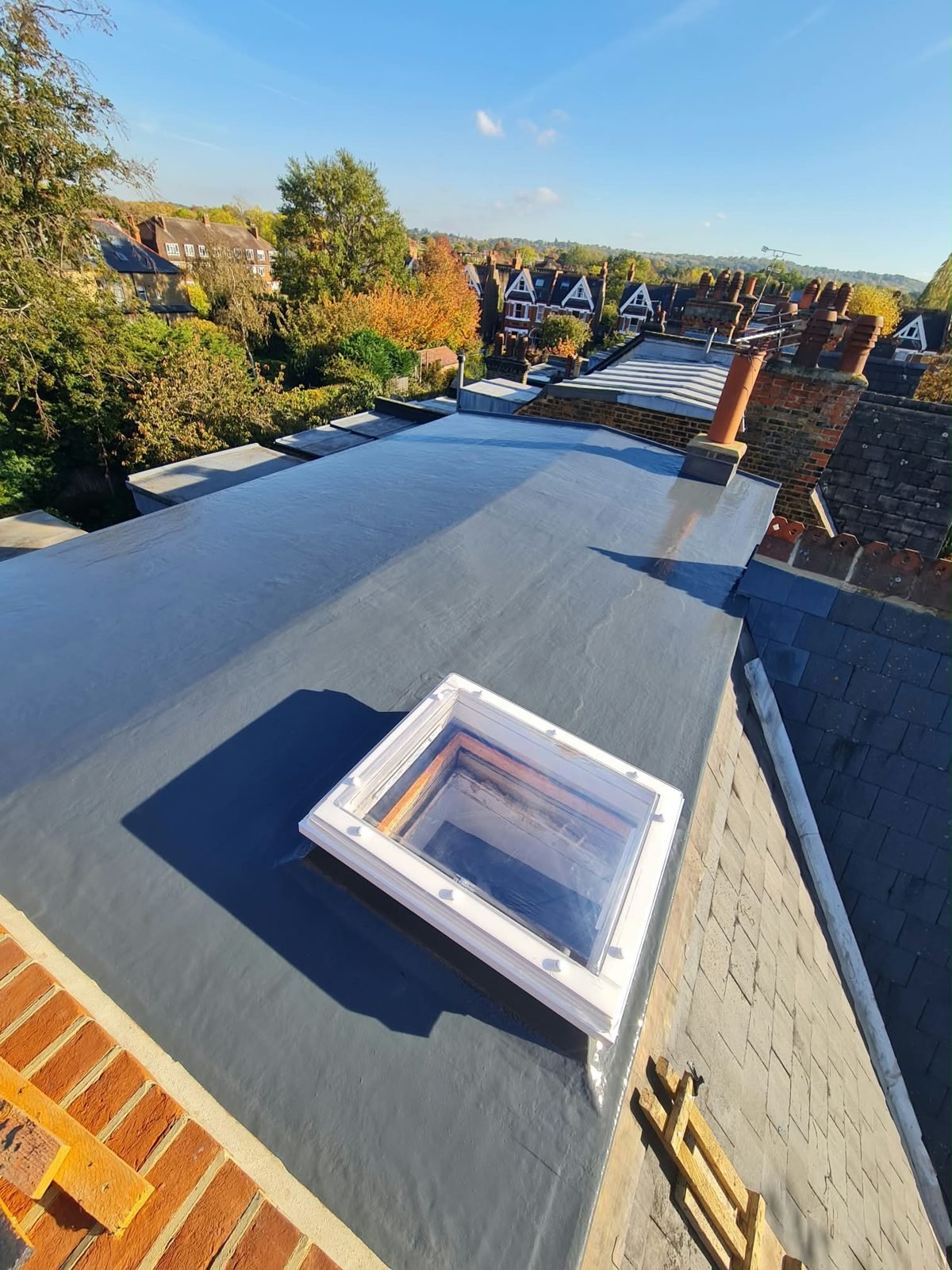
See a recent example from our own work: a warm deck flat roof with a new rooflight opening, built with proper falls and neatly detailed edges.
Where we work in London
Flat roof ponding FAQs
Small puddles that dry within a day or two are common. Water still standing around 48 hours after rain usually means the roof is not draining properly.
Yes. Standing water puts constant pressure on seams, laps and upstands, and is a common cause of flat roof leaks.
Often, yes. Clearing or adding outlets and building up small low spots can solve it. A new roof is usually needed only when the deck has sagged or the covering is worn out.
Current guidance for new flat roofs aims for a finished fall of at least 1:80, so water runs freely to the outlets.
Yes. We often work with freeholders and managing agents on shared roofs and provide one written quote.