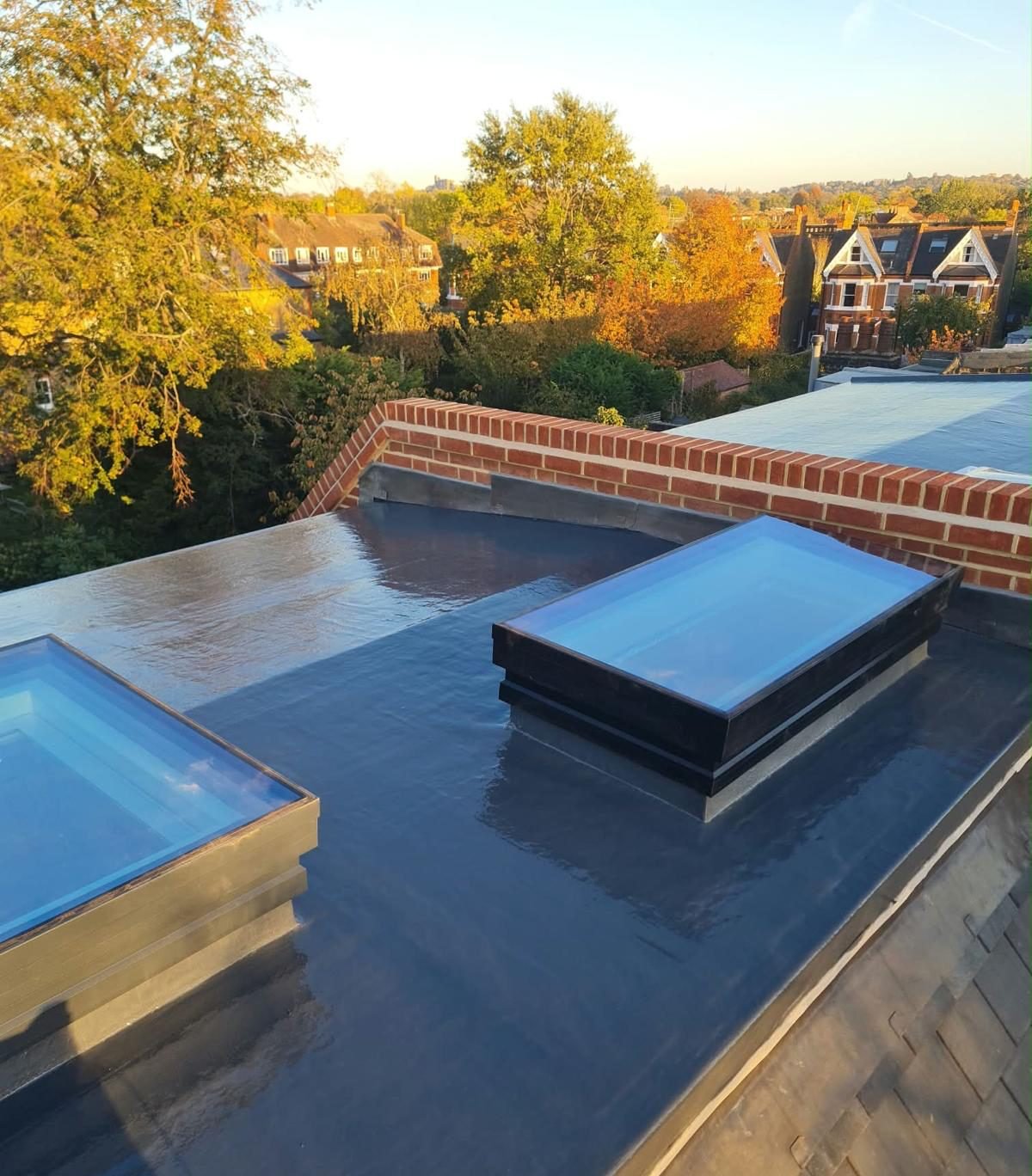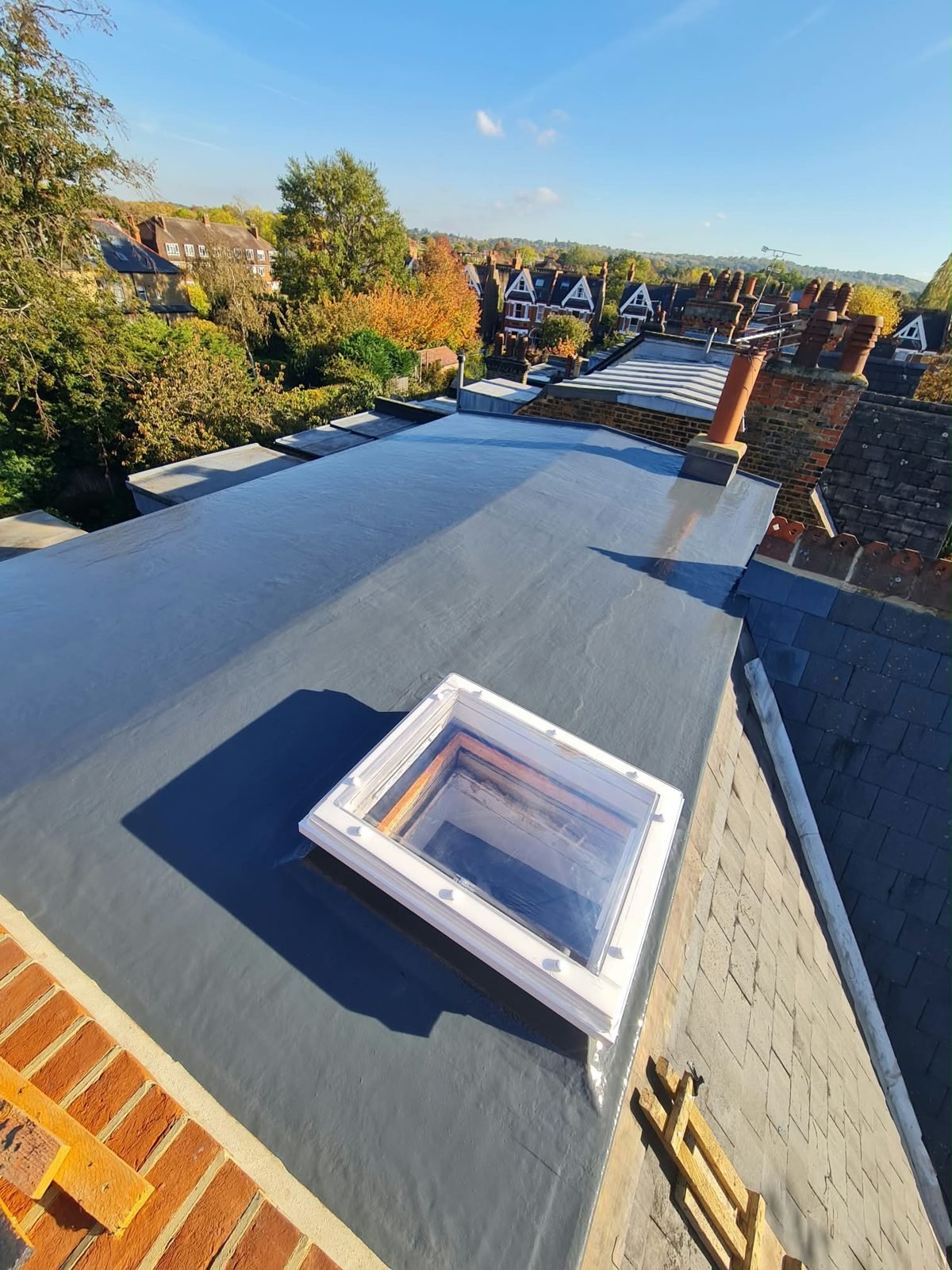
Last week our team completed a new warm deck flat roof on a London house, including a brand-new opening for a rooflight to bring daylight into the room below. Here is what the job involved, and why a warm deck build-up was the right choice.
What we did
- Built the new flat roof as a warm deck, with the insulation laid above the roof deck.
- Formed a new opening in the roof and fitted a kerbed rooflight.
- Finished the roof with a seamless waterproof covering, dressed up the upstands and edges.
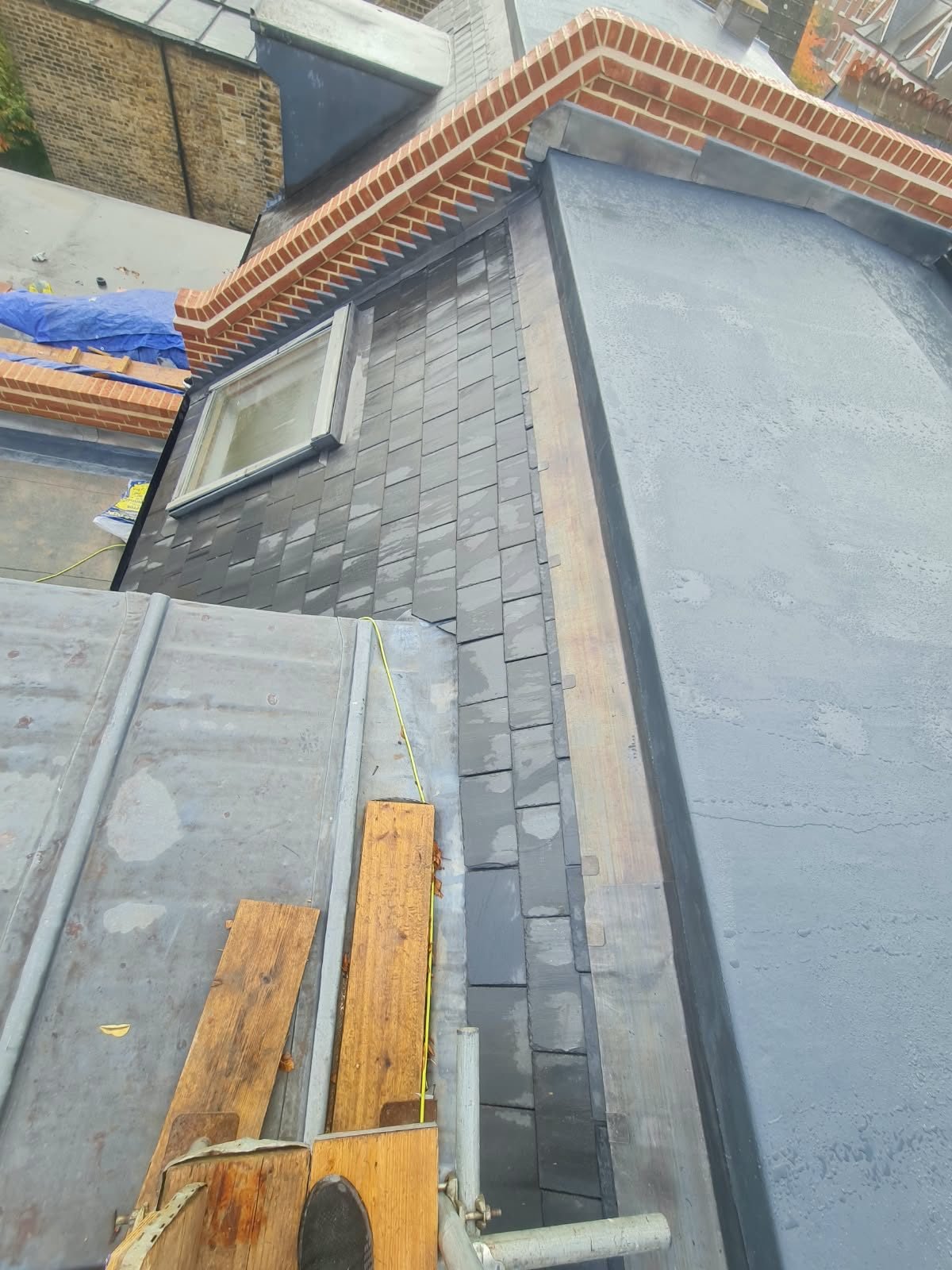
- Detailed the junctions where the new roof meets the slate-clad dormer and its roof window, the brick parapet and the neighbouring lead roof.

What is a warm deck flat roof?
In a warm deck roof the insulation sits on top of the roof deck, with a vapour control layer beneath it and the waterproof covering on top. This keeps the deck and joists warm and dry, which greatly reduces the risk of condensation inside the roof, a common cause of rotten timbers in older cold deck flat roofs. Because the insulation is above the timbers, the roof void does not need to be ventilated.
When most of a flat roof is replaced, Building Regulations usually require the insulation to be brought up to current standards. A warm deck is often the simplest way to achieve this on London extensions and dormers.
Adding a new rooflight
A rooflight is one of the easiest ways to bring natural light into a back room, landing or extension. On a flat roof it sits on a raised kerb, so the waterproofing can be dressed up the sides and water runs away from the opening. Forming the opening while the roof is being renewed means the framing, insulation and waterproofing are all detailed together, which is the best way to avoid leaks later.
Why the junctions matter
Most flat roof leaks start at the edges rather than in the middle of the roof. On this job the new covering meets a slate-clad dormer with a roof window, a brick parapet and the lead roof next door, so each junction was detailed to keep water moving away from the joints. Read more in our guides to flat roof repair or replacement and roof repair in London.
Warm deck flat roof FAQs
A warm deck flat roof has its insulation laid above the timber deck, with a vapour control layer beneath it and the waterproof covering on top. The structure stays warm and dry, which reduces the risk of condensation and rot.
Yes. An opening can be formed in an existing flat roof, but the best time is when the roof is being replaced, so the framing, insulation and waterproofing around the rooflight are detailed together.
When most of a flat roof is replaced, the Building Regulations usually require the insulation to be brought up to current standards. A warm deck is often the simplest way to achieve this.
It depends on the property. Many rooflights do not need planning permission, but conservation areas, listed buildings and flats have extra rules, so check with your council first.