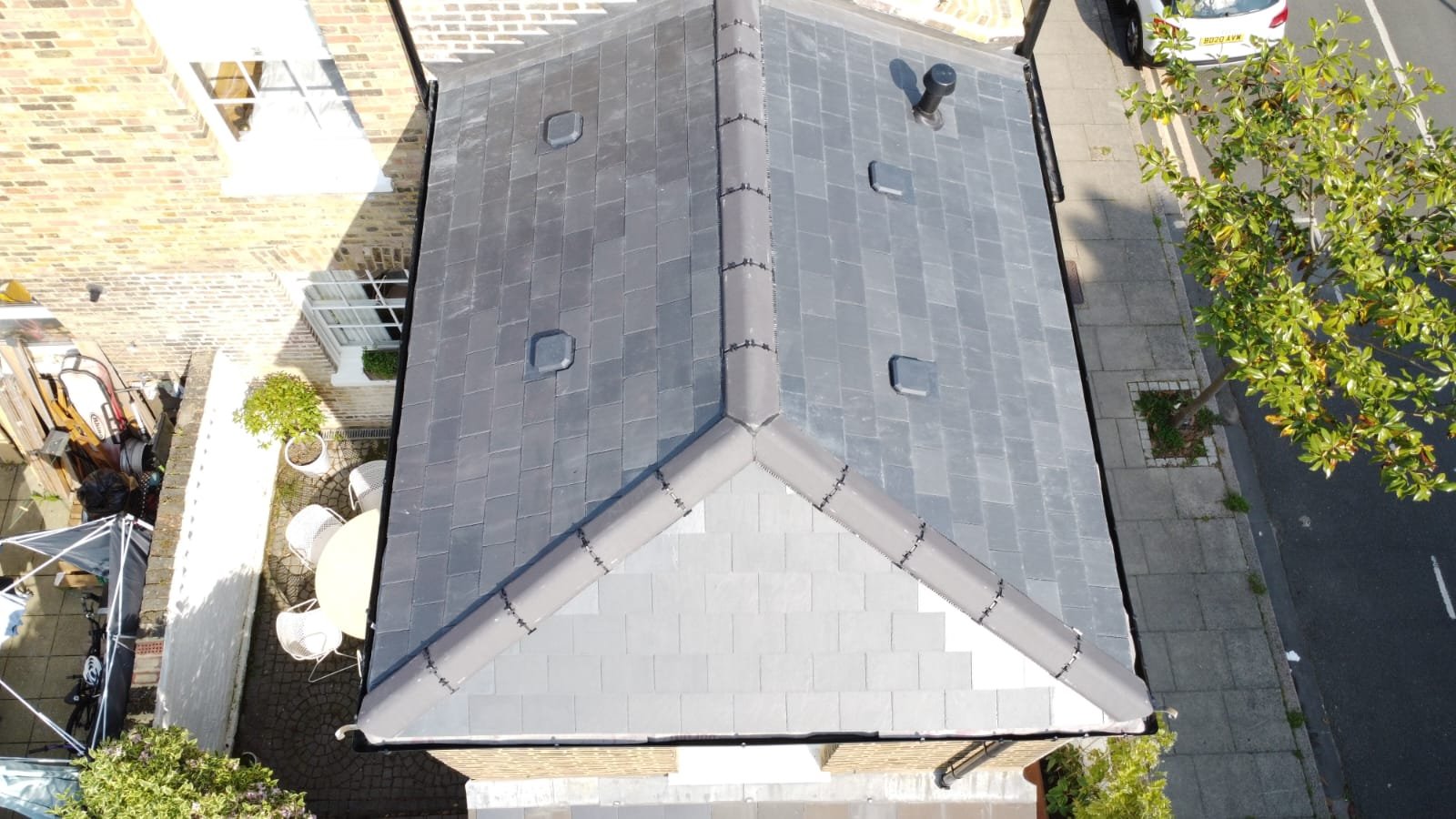
The front of a London house takes the most weather and the most pollution, and it is the part everyone sees. Over a century or more, brick fronts collect soot, lose their mortar, crack around windows and are often painted or patched with the wrong materials. Facade restoration brings the front back to sound, weathertight condition and restores its original look. This guide explains what facade restoration involves, how the work is done, and what to check before you start.
What facade restoration involves
Every front is different, but most London facade restorations combine several of the following, carried out in the right order so that each stage protects the next.
Cleaning
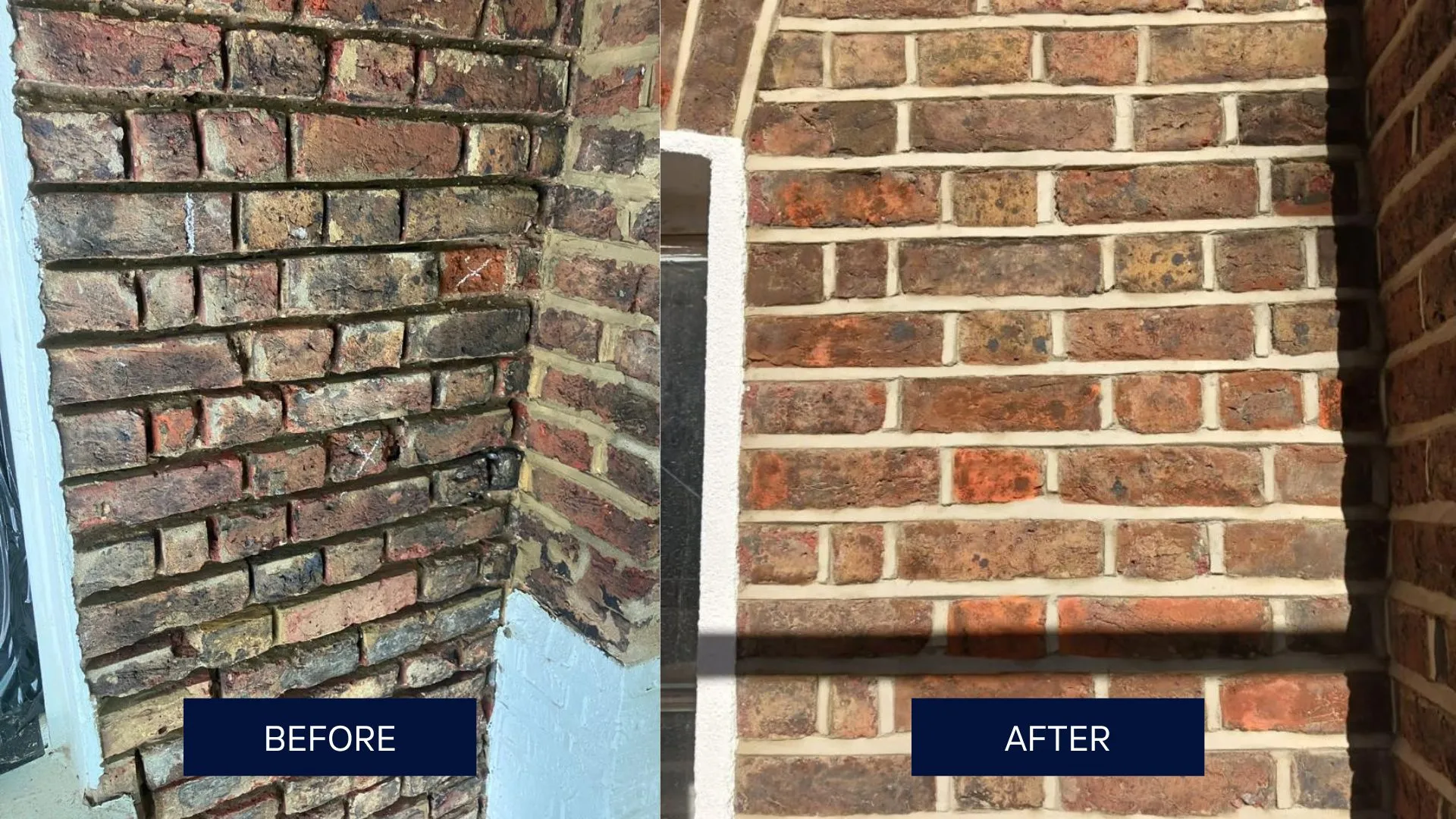
Soot, traffic grime and biological growth darken London stock and red brick. Cleaning with controlled steam or low-pressure vortex systems removes the dirt without stripping the fired face of the brick. Our brick cleaning guide explains the methods in more detail.
Paint removal
Many Victorian fronts were painted in the 20th century. Masonry paint can trap moisture in the brickwork, leading to damp and spalling. Where the brick underneath is in reasonable condition, paint can usually be lifted with steam and specialist removers, always tested on a small area first.
Brick and arch repairs
Spalled or cracked bricks are cut out and replaced with matching reclaimed or new bricks. Cracked brick arches, window heads and sills are repaired or rebuilt, and cracks in the wall can be stabilised with stainless steel helical bars. See our guides to brick repair and spalling bricks.
Repointing
Once the brickwork is clean and repaired, worn or cement-filled joints are raked out and repointed in a mortar that matches the original in colour, texture and strength, usually lime on older buildings. Read more in our repointing guide and lime mortar vs cement.
Stone, stucco and details
Many fronts also have stone sills, stucco bands, cornices or decorative terracotta. These are repaired at the same time so the whole elevation is finished together.

Signs your house front needs restoring
- Dark, stained or patchy brickwork, especially under windows and around chimneys.
- Mortar that is recessed, crumbling or has been patched with hard grey cement.
- Bricks with flaking or broken faces.
- Cracks around windows, doors or brick arches.
- Peeling masonry paint or damp patches on inside walls.
- Plants growing from joints or ledges.
How a facade restoration project runs
- Survey: we inspect the front, check the brick, mortar and details, and look for the cause of any damp or cracking.
- Test areas: cleaning and mortar samples are tried on a small area so you can see the finish before the work goes ahead.
- Written quote: the scope, materials, method and access are set out clearly.
- Access: scaffolding is put up, with a council licence where it stands on the pavement.
- Cleaning and repairs: the facade is cleaned first, then bricks, arches and details are repaired.
- Repointing and finishing: joints are repointed, the front is given a final clean and checked with you before the scaffold comes down.
Choosing the right cleaning method
Soft London brick has a thin fired outer face. Sandblasting, high-pressure washing and strong acids can remove that face, leaving the brick porous and quicker to decay. Gentle methods such as superheated steam (DOFF) and low-pressure vortex cleaning (TORC) clean effectively while protecting the surface, which is why conservation officers usually prefer them.
Conservation areas and listed buildings
Large parts of London are covered by conservation areas, where councils expect facades to keep their original materials and appearance. Cleaning and like-for-like repairs do not normally need planning permission, but painting a previously unpainted front, rendering it or changing windows may. Listed buildings can need listed building consent for cleaning and repointing as well as alterations. Our listed building restoration guide explains more.
Where we work in London
Facade restoration FAQs
It depends on the size of the front and the amount of repair. A typical terraced house front often takes one to three weeks once scaffolding is up, with time allowed for the weather.
Not when the right method is used. We test a small area first and use the gentlest cleaning that works, such as steam or low-pressure vortex cleaning.
Usually, yes. Most masonry paints can be lifted with steam and specialist removers. We test first, because the condition of the brick underneath varies.
Cleaning and like-for-like repairs do not normally need planning permission. Listed buildings may need consent, and changes such as painting or rendering can need permission in conservation areas.
Yes. We often work with freeholders and managing agents and can provide one written quote covering the whole facade.