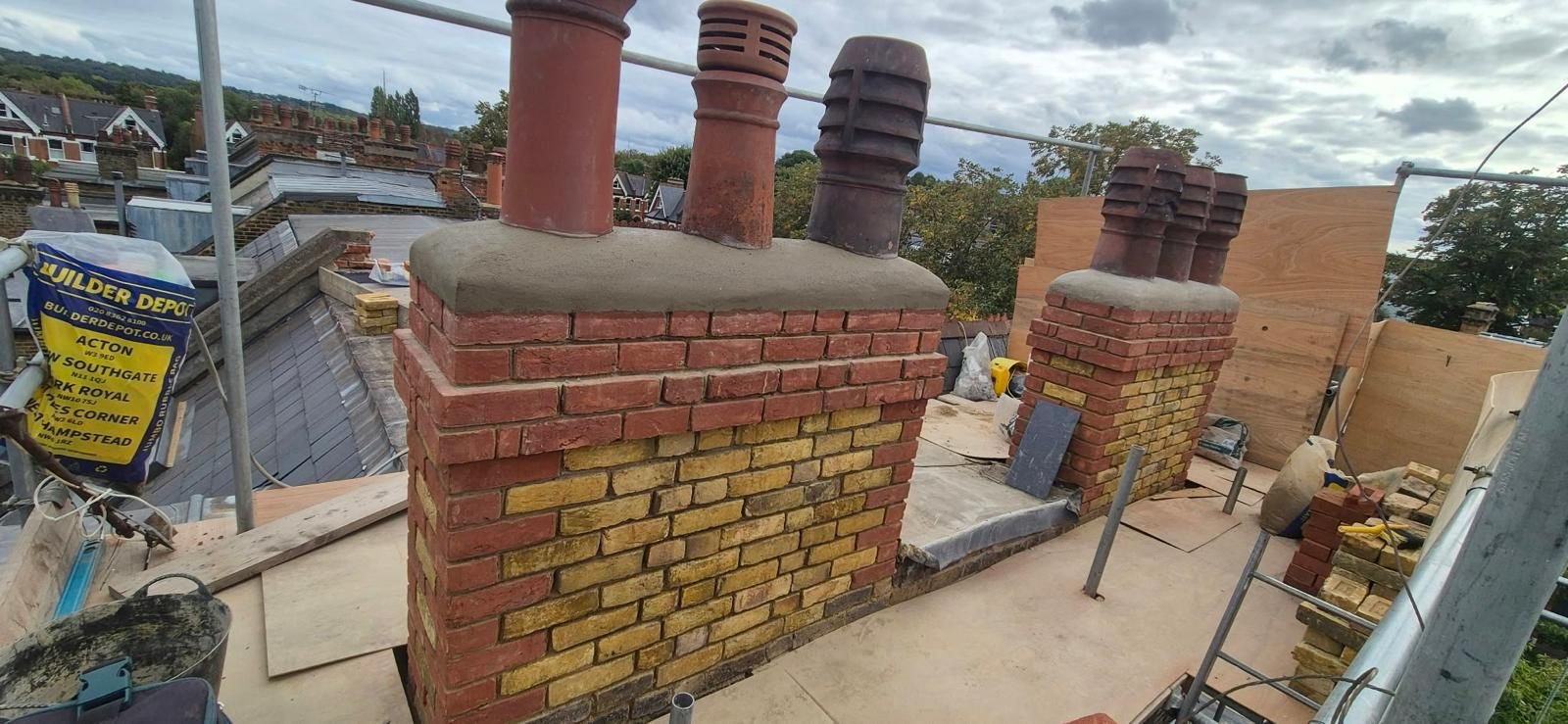
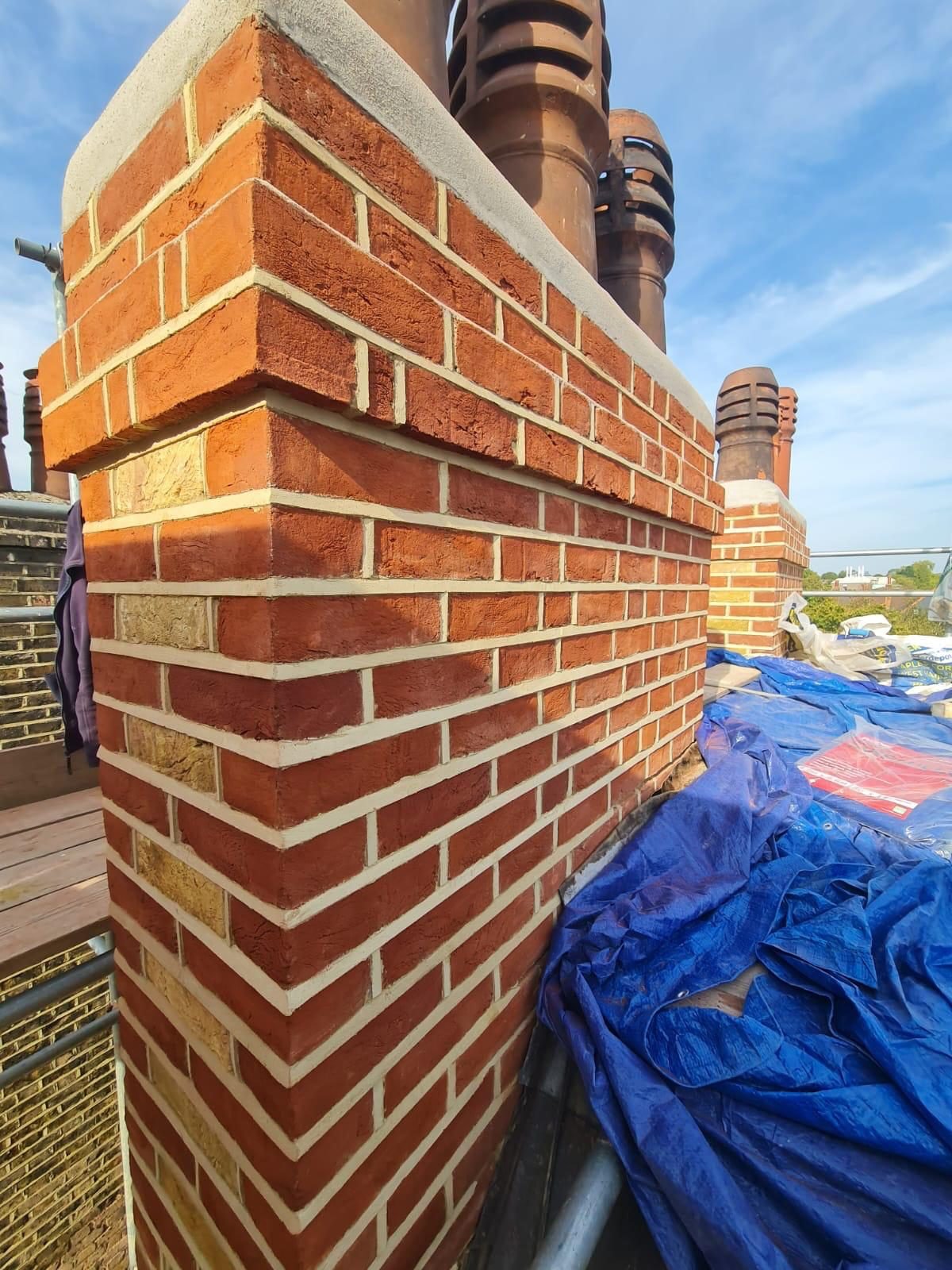
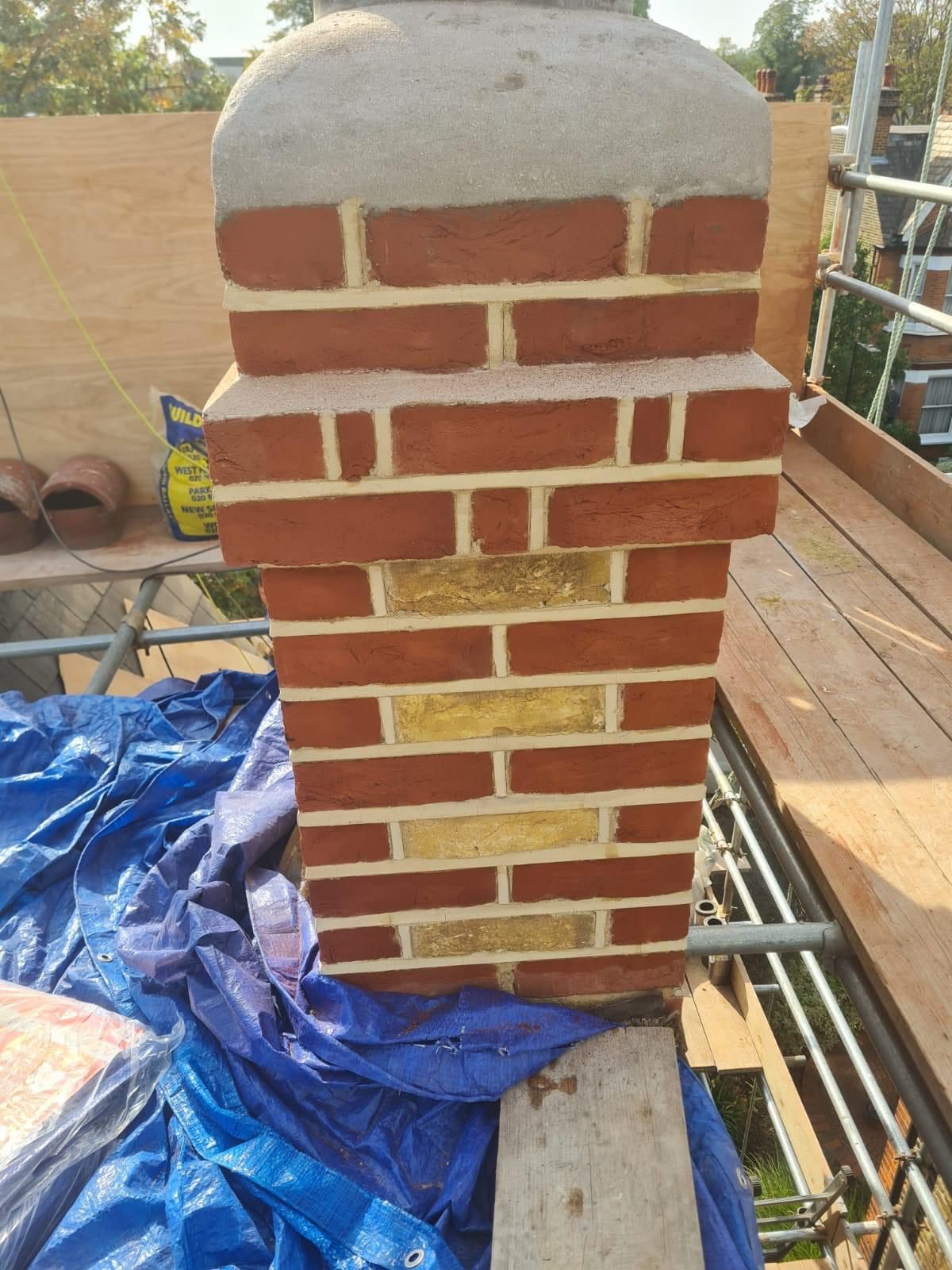
On a recent London job our team rebuilt two chimney stacks back to their original specification, using imperial reclaimed bricks and soft red rubber bricks so that the new brickwork matches the house and the rest of the street.
What we did
- Rebuilt the chimney stacks to their original design and proportions.
- Used imperial reclaimed London stock bricks for the main body of each stack.
- Used red rubber bricks for the corners and the projecting courses at the top, as on the original.
- Rebuilt the oversailing courses that project at the top of the stack and throw rainwater clear of the brickwork below.
- Reinstated the chimney pots, including ventilated cowls, and finished the top of each stack with new flaunching.
Why imperial reclaimed bricks?
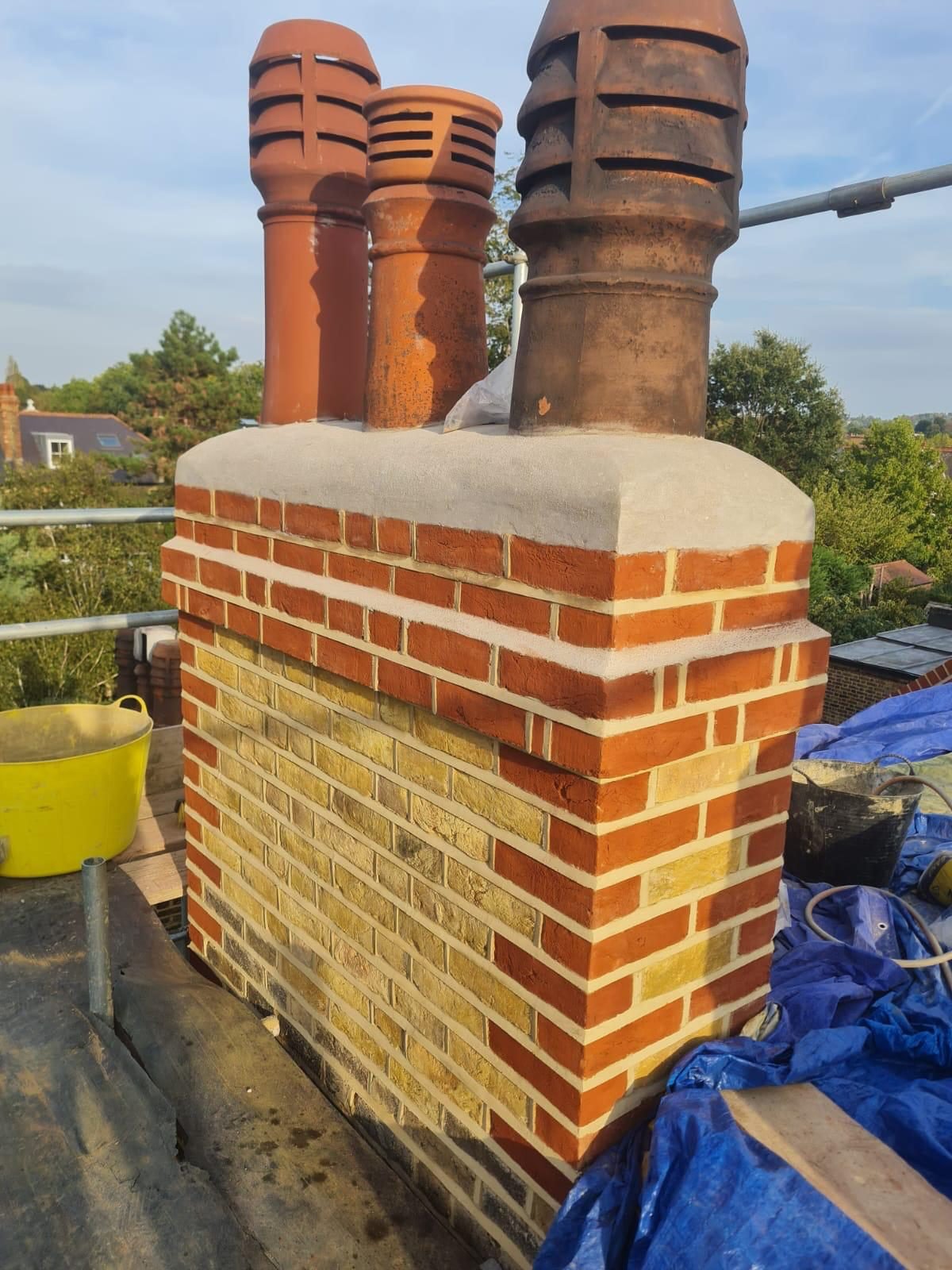
Most older London houses were built with imperial bricks, which are slightly larger than modern metric bricks. Mixing the two means the courses do not line up and the repair stands out. Reclaimed imperial bricks match the original size, colour and weathered texture, so the rebuilt stack looks as if it has always been there.
What are rubber bricks?
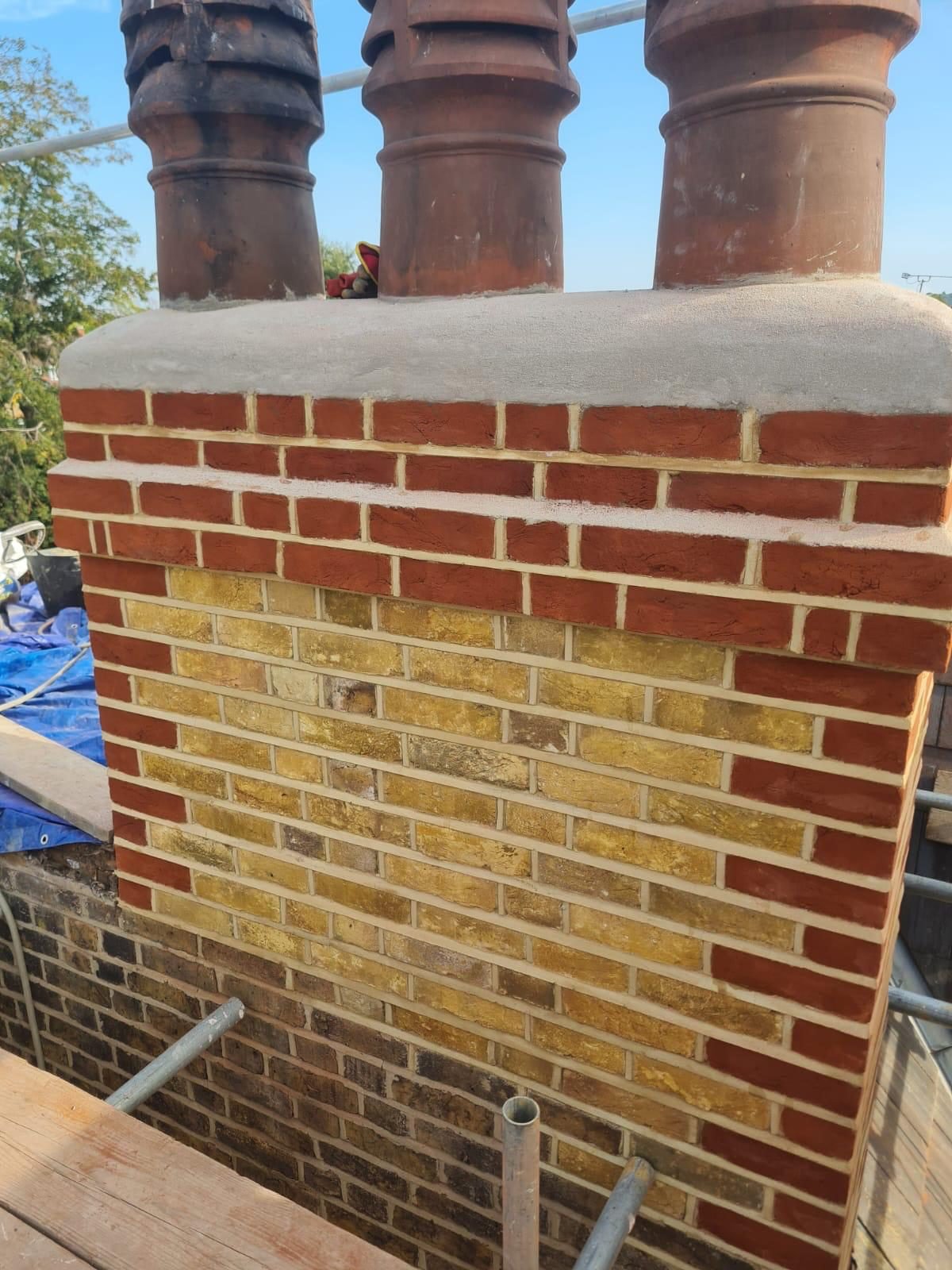
Rubber bricks, sometimes called rubbers, are soft, fine-textured red bricks traditionally used for crisp decorative work such as corners, arches and bands. They give many Victorian chimneys and facades their contrasting red details, and using them again keeps the stack true to its original look.
Why chimney stacks need rebuilding
Chimney stacks are the most exposed brickwork on any house. Over the years frost, wind-driven rain, cracked flaunching and hard cement pointing loosen the brickwork until the stack leans or bricks start to come away. When a stack is badly weathered, rebuilding it from the roofline is often safer and better value than repeated patch repairs. Our guide to chimney repair, lead flashing and parapet walls explains the options.
Chimney stack rebuild FAQs
Yes. Using reclaimed bricks of the right size, colour and texture, and rebuilding details such as oversailing courses, a rebuilt stack can match the original and the rest of the street.
A stack with sound bricks and worn joints can usually be repointed. If it leans, has loose or cracked brickwork, or bricks are coming away, rebuilding from the roofline is normally safer and better value.
Rebuilding like for like does not usually need planning permission. Listed buildings may need consent, and removing or lowering a stack in a conservation area may need permission.
Yes. Rebuilding a chimney stack needs safe access, normally scaffolding around the stack, which we include in the written quote.